Beyond the 4Cs: How Coloured Gemstones Are Actually Graded
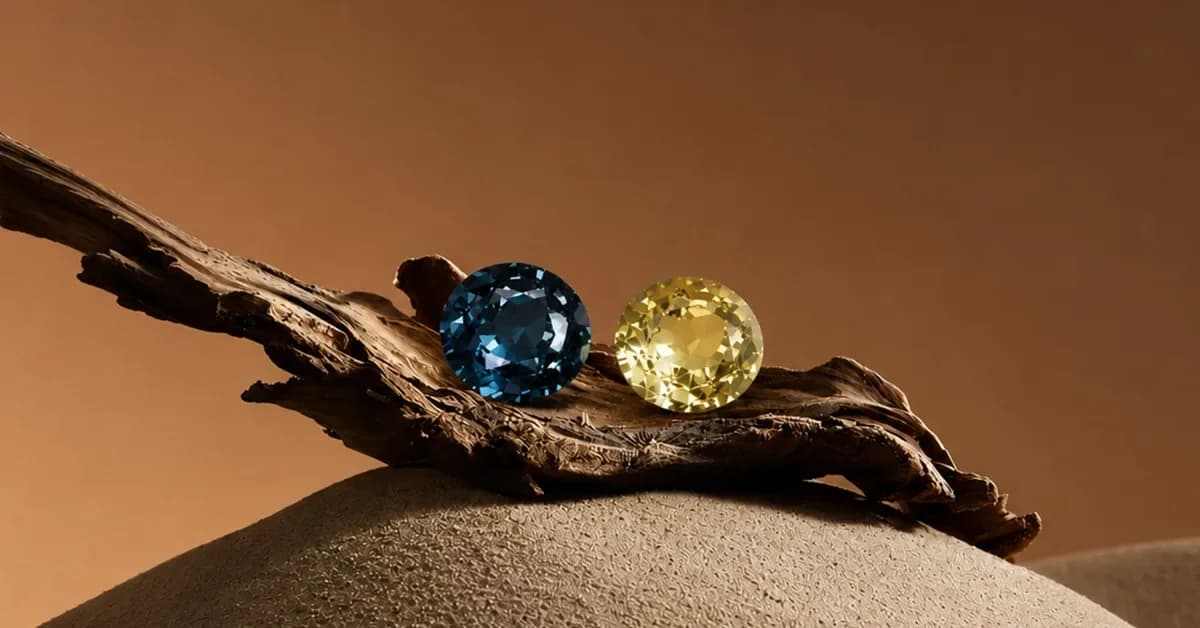
Picture this: You walk into a jewelry store and see two identical blue sapphires. They weigh the same and look almost identical. Yet, one is priced at ₹5000 and the other is priced at ₹75000. Ever wondered why there is such a price gap between two gemstones that are almost identical? The answer to this is the criteria that evaluates and decides coloured gemstone grading is way too different than that for a diamond. Typically a diamond is judged according to its cut, color, clarity, and carat, the famous 4C’s.
Coloured gemstones’ market value depends on a combination of colour quality, rarity, origin, treatments, inclusions, and expert visual assessment. Because no single international grading system exists for coloured gemstones, evaluating them requires both scientific testing and years of gemological experience.
The beauty of coloured gemstones lies in characteristics that extend beyond standard measurements, colour richness, origin, rarity, transparency, treatments, and the subtle visual qualities that only trained gemologists can accurately assess. In this article, we'll explore how coloured gemstones are actually graded, why no universal grading system exists, and the factors that truly determine their quality and value.
Why Coloured Gemstones Can't be Graded Like Diamonds

The 4Cs which are the colour, cut, clarity and carat weight were originally designed for diamonds. This evaluation is chemically consistent along with being relatively uniform in appearance. Coloured gemstones are the opposite of this evaluation and chemical composition. Each type of coloured gemstone has:
- A different internal structure.
- A different level of acceptable inclusions.
- A different colour expectations altogether.
Due to this there is no standard gemstone grading guide for coloured gemstones, globally. Instead of assigning some fixed grades, the gemmological laboratories make sure to describe their characteristics in detail. This is where the first big shift occurs: you are not just looking at a single score, rather you are reading a complete profile of the gemstone.
The Real Foundation: The ‘Modified 4Cs’
Even though the rule of 4Cs doesn't fully apply to coloured gemstones, they still act as a foundation stone for the gemstone quality factors. For these beautiful gemstones, gemmologists have expanded the criteria into a broader framework which includes the following things:
- Colour (most important)
- Clarity (context-based)
- Cut (beauty-driven, not standardized)
- Carat (less predictive of value)
- Origin
- Treatment
Naturally, the parameters extend the 4Cs, some professionals also have named this as the 5Cs or even the 6Cs of coloured gemstones. Further in the blog there is a proper breakdown of all these parameters which will help you understand these stones better.
Colour: The Heart of Gemstone Grading

One primary rule in gemstone grading is that colour drives more value than any other factor. Gemstones are not like diamonds where less colour is preferred rather, they are prized for their intense and vivid colour. The gemstone colour grading scale evaluates colour on three core components, those components being:
- Hue: the dominant colour which directly refers to red, blue, green, etc colour.
- Tone: the lightness or darkness of the stone.
- Saturation: the intensity or purity of the colour in the gemstone.
For example, a premium quality blue sapphire will not just be labelled as blue, rather it would be described as:
- Medium-dark tone
- Strong saturation
- Slight violetish-blue hue
This is the layered description which forms the real gemstone colour grading scale even though it is not provided in a simple chart in reports. In this what the experts mostly look for is:
- Even colour distribution in the gemstone.
- No patchy areas or zoning in the stone.
- The stone has strong but not overly dark saturation.
There needs to be a perfect balance in the gemstone as too dark coloured stone can lose its brilliance and on the other hand, too light can look washed out again losing its significance.
Read Also: Understanding Grading Scales Used in Gemstone Reports
Clarity: It Depends on the Stone

Clarity (in the case of coloured gemstones) is not measured in the same manner as it is done in a diamond. Where inclusions in a diamond are not desirable, this is not the case for coloured gemstones. Inclusions are a part of the authenticity of these gemstones and sometimes these are even desirable. For instance, an emerald is rarely ever seen without any inclusions and these inclusions have their own value. Similar is the case with rubies as well.
There are certain laboratories which uses a certain clarity grading practices, which are as follows:
- VVS (very, very slight inclusions)
- VS, SI, I
This clarity variants are loosely applied to coloured stones and vary according to gem type as well. A ‘slightly included’ emerald can be considered extremely valuable whereas the same clarity in a sapphire will lower its value.
Cut: Beauty Over Precision

Cut is a stagnant look towards coloured stones. The parameter is appropriate and a standard for diamonds but the same is not the case for the coloured stones. The reason behind the same is because priorities change when it comes to coloured stone, they are as follows:
- The focus on maximising the colour.
- Priority on minimising visible inclusions in the gemstone.
- Focus on preserving the weight of the gemstone.
All these aspects combined lead to more variations in shapes and proportions.
Now the important bit, what actually matters while evaluating a cut are:
- Symmetry
- Proportions
- Light performance (brilliance)
- Face-up appearance
When talking about coloured gemstones, a perfectly symmetrical and cut stone has high chances of looking dull if the cutter doesn’t focus on optimising the colour. This is the reason why a cut in coloured gemstone is judged visually and not mathematically.
Read Also: How GIA Certification Impacts Global Gemstone Pricing
Origin: The Hidden Value Driver

Origin plays a vital role in the process of gemstone grading. For instance two identical looking stones can have varied price ranges because of their origin. Some of the examples of the same are as follows:
- Kashmir sapphires are known for their velvety blue colour.
- Burmese rubies are famous for their ‘pigeon blood’ red.
- Colombian emeralds consist of vivid green colour along with high transparency.
There are various laboratories that determine the origin of a gemstone by using advanced testing however not all stones receive these origin reports.
The reason why theses origin matters is because:
- Rarity
- Historical Reputation
- Market Demand
Origin is not listed as a ‘grade’ in a report mostly, but it has a strong influence over changing a stone’s price and desirability amongst people with knowledge about the said topic.
Treatment: The Make-or-Break Factor

Mostly all the gemstones in the market used in a jewellery item are treated in some way or the other way because flawless coloured stones are rare and are an investor’s favorite piece. These kinds of pieces demand extra price as well. Some of the treatments done to these stones are:
- Heat treatment is quite common in sapphires.
- Oil filling is common in emeralds.
- Diffusion or dyeing is a common practice and is a lower value treatment.
Now that we know of various treatments, let’s see how these affect the grading of the coloured stones. Untreated stones as mentioned are rarer and command significantly higher prices. This is the reason why reputable laboratories always disclose the treatments done to a gemstone, making this a crucial part of the grading system for coloured stones.
Transparency, Lustre, and Optical Effects
Coming to the other factors apart from the 4Cs include transparency, lustre, and optical effect in the coloured gemstones. Some of the things that experts also evaluate are:
- Whether the stone is transparent or translucent.
- The surface reflection quality of the gemstone.
- The optical phenomena like the star (asterism), colour change and the chatoyancy (cat’s eye) of the stone.
These are some of the elements that do not necessarily appear as grades in the report but greatly influence the value and classification of the gemstone.
Why There’s No Universal Grading System?
The honest truth to the answer of not having a universal grading system for coloured gemstones is because there can’t be one. Each gemstone has varied characteristics, and they behave differently accordingly as well. For instance:
- Emeralds are known to be naturally included and are valued for the same.
- Sapphires on the other hand are typically cleaner.
- Opals are known for their play-of-colour and not clarity.
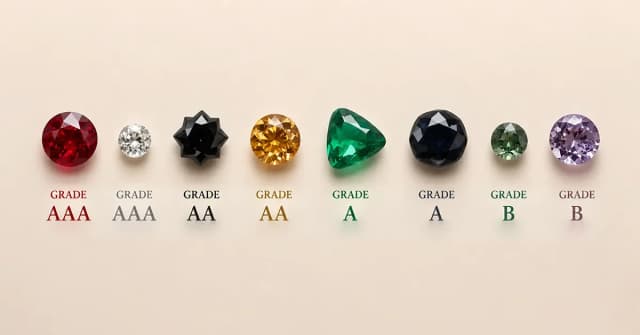
This is the reason why labs majorly focus on descriptively reporting instead of sticking to rigid scoring systems. You will not be getting a grade like A+ rather you will get a detailed report.
How to Read a Coloured Gemstone Report
The easy method of reading a coloured gemstone report is:
- While looking for colour description look for terms like strong saturation, balanced tone, and desirable hue.
- In terms of clarity look for terms; is it eye-clean or does the inclusion affect durability of the stone.
- Always look for treatment disclosure whether the stone is natural or treated.
- If origin is added in the report, then it adds value to the stone.
- Lastly, the overall appearance of the stone as it matters the most.
The Biggest Mistake Buyers Make
The biggest mistake buyers make while looking at a coloured gemstone report is to apply the diamond logic to it. A pale blue sapphire will always value less than a blue sapphire with vivid blue colour. This is what flips the traditional ‘clarity-first’ mindset altogether.
To understand how coloured gemstones are graded you will have to change your thinking from perfection to character.
Conclusion
To conclude we can say that grading for coloured gemstones is not about ticking any boxes rather it is about interpreting a combination of factors. These factors include how the colour dominates, clarity being contextual, if the cut is artistic, and the origin and treatment done to the stone adding layers to its value. The coloured stone not having a universal checklist is what actually makes them interesting and fascinating to work with.
Where diamonds are all about precision, a coloured gemstone is more about nuance. Once you understand this concept then you will start seeing it as an expert. That is when you will understand a gemstone’s geology, time, and human craftsmanship and stop categorising it as a product with grade.
FAQs
1. What are the 4Cs and why don't they fully apply to coloured gemstones?
The 4Cs: cut, colour, clarity, and carat are the standard used to grade diamonds. While these factors are also considered for coloured gemstones, they don't tell the whole story. Gemstones are also valued for their colour intensity, origin, rarity, and whether they have been treated.
2. How much does origin affect a gemstone's grade and value?
A gemstone's origin can greatly influence its value, especially if it comes from a famous source like Kashmir, Burma (Myanmar), or Colombia. However, origin alone doesn't determine quality. A gemstone's colour, clarity, and overall appearance are equally important.
3. What factors determine gemstone quality?
Gemstone quality depends on several factors, including colour, clarity, cut, carat weight, transparency, and any treatments. Among these, colour is often the most important. A gemstone with vibrant colour and good overall appearance is generally considered more valuable.
4. What's the difference between GIA, GRS, GII, and IGI certification?
These are gemological laboratories that test and certify gemstones. GIA is globally known for its strict standards, while GRS specialises in coloured gemstones. IGI certifies both diamonds and gemstones, and GII is a respected Indian laboratory. All provide reports that confirm a gemstone's identity and treatments.

Durgesh Sharma
Durgesh Sharma is a passionate writer and certified gemstone expert with over four years of practical experience in the field of gemology. Alongside his creative writing journey, he specializes in helping individuals choose the right gemstones based on astrological principles and personal needs.