How GIA Certification Impacts Global Gemstone Pricing
Introduction
In the present global gemstone market, prices are no longer based only on the outer beauty of the gemstone. There is a high possibility of you having no information about the stone and might see a vivid ruby, sapphire which glows under the light, a flawless looking emerald but none of this without a proper documentation is guaranteed, it is rather just a coloured stone bought solely on trust. This is where the GIA certification comes to play.
With the increasing consumer knowledge of the stone, the idea of a certificate being ‘nice to have’ to a core pricing driver. You could be anywhere, in Jaipur, a dealer in Bangkok, an investor, the presence and absence of a GIA report can drastically affect the gemstone’s value, how it is negotiated and sold at the end.
This is the sole reason of this blog today, to break down how GIA certification affects gemstone price. The blog will also focus on way the certification from GIA matters and how it interacts with other gemstone valuation factors which shape the market.
What is GIA Certification, Really?
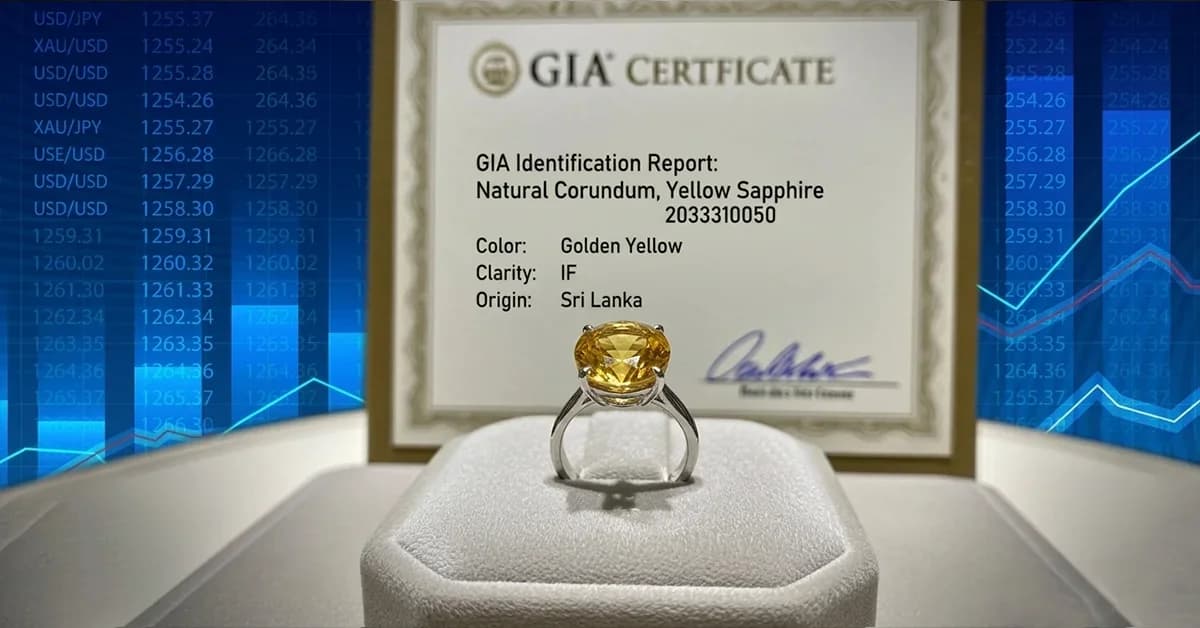
If we look at the basics then, GIA certification is a scientific report which is issues by the Gemological Institute of America (GIA) which is the most respected authority in the gemstone industry. A certificate from this laboratory provides an objective analysis of the gemstone’s identity, quality and its characteristics. A GIA report includes the following things:
- Confirmation of the stone if it is natural or synthetic.
- It discloses if any treatment is done to the stone like heat, dyeing, fracture filling, etc.
- It is a detailed grading system which is based on a standard parameter.
- The report also talks about measurement, weight, and sometimes the origin of the stone as well.
This report is not anything like a seller’s description. Rather the report from GIA is independent and unbiased which is the reason why t holds such value and weight in making the pricing decisions.
The Direct Link: How GIA Certification Affects Gemstone Price
There are certain factors because of which a certificate from GIA has an effect on the pricing, those parameters are as follows:
Certification Builds Trust, and Trust Adds Value
In the gemstone industry one of the easiest ways to check the power of an authentic certificate is through the pricing. In case of uncertainty the prices lowers down and where there is certainty the prices rise itself. Therefore, a GIA certificate provides buyers the confidence of:
- The gemstone being genuine.
- The quality of the gemstone being accurately represented.
- That there are no treatments left undisclosed.
Due these reasons and clarity about the stone, they often sell at a premium price in comparison to the certified stones. there is a high chance that other stones are priced lower due to the risk of them getting exposed.
In the global markets and the change in online platforms, the trust of certification has become more important. Buyers when they cannot look at the gemstone physically, a certificate come as a substitute of direct evaluation of the gemstone.
Standardization Enables Fair Pricing Across Markets
Due to the awareness of certification of the gemstone, prices for them have started becoming standardised. This was not the case earlier; the stones were varied wildly between different regions along with having different names to them. Every seller has a different language which is why one might call it ‘fine quality’ and the other can label the same stone as ‘commercial grade’.
This is also one of the big problems which a GIA certificate solves. They have introduced standardised grading system amongst which the famous one is the 4Cs. The 4Cs when bifurcated means, cut, colour, clarity and carat weight. With the help of this standardisation, it allows the buyers to:
- Compare stones around the globe.
- Force the sellers to justify their pricing.
- And the investors to evaluate the assets consistently.
To look at practically, a GIA certified gemstone in India can be priced and sold with full confidence in US and Europe because the grading system is universally the same and understood in the same manner as well.
Certification Highlights Hidden Value (or Reveals Flaws)
There are various stones in the market which goes through treatments for enhancing their appearance, but this treatment reduces their value significantly. Without the help of the certification, all these treatments will stay undisclosed. Herein, GIA clearly states the following things:
- If the gemstone is treated or not.
- If yes, then what kind of treatment has been done.
- The exact kind of enhancement done to the gemstone.
All these factors have a direct impact on the untreated gemstones being priced higher and treated stones being priced lower. For instance, two identical looking gemstones like ruby can have very different pricing on the basis of whether they have gone through any treatment or not.
The Premium Effect: Why GIA-Certified Stones Cost More
There is a reason why GIA is valued so much and if a gemstone is certified by GIA its price automatically increases, let’s have a look at all the reasons behind the same.
Market Perception and Brand Credibility
There are various laboratories in the world, but a GIA certification is considered the gold standard in the market due to the following reasons:
- There is trust factor amongst buyers in comparison to lesser-known labs.
- Retailers have a preference of selling GIA certified stones due to buyer understanding.
- Auction houses around the world required stones which are certified.
Due to all the reasons listed above a GIA certified stone offers a higher resale and retail price.
Increased Liquidity in the Global Market
It is common knowledge that buyers do look out for certification which makes the liquidity of a gemstone better, the reason behind the same is:
- Buyers further do not need any additional verification.
- Insurance and verification of the gemstone become easier.
- International transactions have lower disputes.
This liquidity further translates to higher demand, and the higher the demand, it also pushes prices upwards.
Investment Appeal and Long-Term Value
Certification and gemstone for an investor and a collector have always been non-negotiable. A GIA certified hence offers:
- Retained value over time.
- Ease of resale in auctions and private markets.
- A documented proof of quality.
In comparison to a certified gemstone, an uncertified gemstone might require further re-evaluation which delays the sales and reduces buyer’s confidence.
The Cost Side: Does Certification Itself Affect Pricing?
A certification does affect the pricing heavily. However, one thing to note is that certification costs are built within the final price of the stone. The cost of a GIA certificate for any gemstone is dependent on its size and type, for example:
- Diamonds: roughly $100–$1,000
- Coloured stones: roughly $50–$300
These prices are then forwarded to the buyer. However, the thing to be noticed is that the price increases from certification is far more than the cost of the certification itself.
High-Value Stones Benefit More
For gemstones of lower value certification does not impact the price of the stone that significantly. However, in case of high-value stone:
- Certification has the capacity to increase price by thousands.
- It determines the difference between a sale and a no sale.
- It has the capacity to drastically affect the resale value.
This is why the premium gemstone are always certified.
GIA Certification vs Non-Certified Stones: A Real Pricing Gap
Let’s have a proper breakdown of all the factors which affects a GIA certified stone and a non-GIA certified stone.
Certified Stone
- Verified authenticity
- Transparent grading
- Higher buyer confidence
- Premium pricing
Non-Certified Stone
- Uncertain origin or treatment
- Subjective grading
- Lower buyer trust
- Discounted pricing
This gap is for almost all the precious stones like diamonds, sapphires, emeralds, rubies and more.
How Certification Interacts with Other Gemstone Valuation Factors
We have established till now that GIA certification holds significant value across the gemstone market globally, but why is the question. The answer is that they have standard rules for analysing a gemstone which includes:
- Quality of the stone which includes the colour, curt, clarity and carat weight of the gemstone. A certificate appropriately measures all these qualities of the stone and provides a clear picture to the buyer.
- Rarity of a gemstone is one of the deciding factor for higher price. A certificate confirms the rarity of the stone.
- There are certain origins of the gemstones which automatically commands higher prices due to their quality and history. A certificate clarifies the origin of thee stone making the information firm and confirm.
- There is huge impact of market trends, but a certificate helps the buyer to buy the correct product and know what they are paying for.
When GIA Certification Matters the Most
As mentioned prior as well not every gemstone requires a certification but in certain cases it becomes essential, those cases are as follows:
- High-value gemstones
- Investment-grade stones
- Engagement rings and fine jewellery
- International trade transactions
When it comes down to these things then certification has a direct impact on pricing and buyer decisions as everyone wants a trusted gemstone for their special occasion or for business purposes.
Common Misconceptions About GIA Certification and Pricing
Some of the common misconceptions about GIA certification is as follows:
- First being certification always makes the stone expensive which is not true, it just reveals the true value of it which could be anything from our expectation.
- All laboratory certificates are the same. This not the case as GIA certification holds more value due to their large acceptance globally and their analysis techniques.
- Another big misconception is that one can judge the value of a stone without proper certification. This is untrue as gemstone market is varied and an unexperienced buyer without proper certification can pay more than the stone’s value.
The Future of Certification in Gemstone Pricing
The role of certification is growing significantly day by day as the buyers are getting aware of all the different things in the market. Hecne, the future is of emerging trends which includes:
- There should be digital verification systems.
- There should be a blockchain-backed gemstone records.
- There needs to be an increase of transparency in the system.
With growing buyer knowledge, certificate has already become an essential part of buying a gemstone. However, with other trends and rise of digital platforms, certificates will become non-negotiable factor while deciding pricing.
Conclusion
If we have to strip it down to one thing of what does a GIA certification does hen it would be to give confidence to the buyer. It gives confidence to pay more, sellers to ask for more money and the markets to function properly.
Gemstone market is a market where prices can change drastically over a small difference, this where a certification acts as an anchor to keep things rational and transparent along with maintaining a consistency.
You could be a first-time buyer or an investor, having an understanding of how GIA certification affects gemstone price is important. Because the simple difference between a good deal and a costly mistake is the difference of a lab report and the authenticity of the stone.

Durgesh Sharma
Durgesh Sharma is a passionate writer and certified gemstone expert with over four years of practical experience in the field of gemology. Alongside his creative writing journey, he specializes in helping individuals choose the right gemstones based on astrological principles and personal needs.
- Introduction
- What is GIA Certification, Really?
- The Direct Link: How GIA Certification Affects Gemstone Price
- The Premium Effect: Why GIA-Certified Stones Cost More
- The Cost Side: Does Certification Itself Affect Pricing?
- High-Value Stones Benefit More
- GIA Certification vs Non-Certified Stones: A Real Pricing Gap
- How Certification Interacts with Other Gemstone Valuation Factors
- When GIA Certification Matters the Most
- Common Misconceptions About GIA Certification and Pricing
- The Future of Certification in Gemstone Pricing
- Conclusion