Coloured Gemstone Grading: 15 Questions Buyers Usually Ask
Well, it is rightly said that all that glitters is not gold, and when it comes to gemstones, that’s truer than most buyers realise. Two gemstones can look absolutely identical to the naked eye and still be worlds apart in quality, simply because of factors most people never think to ask about: how the colour is graded, whether the stone's been treated, or where it was actually mined. In layman’s language, the whole gemstone grading system.
And that is exactly where grading comes in the scene, to be precise: coloured gemstone grading. It's the process that separates a genuinely fine stone from one that just photographs well. Before we get into the specific questions buyers ask most often, let’s understand what grading actually means for a coloured gemstone and how gemstones are graded.
What Is Coloured Gemstone Grading?
The most common question that arises is: how are coloured gemstones graded?
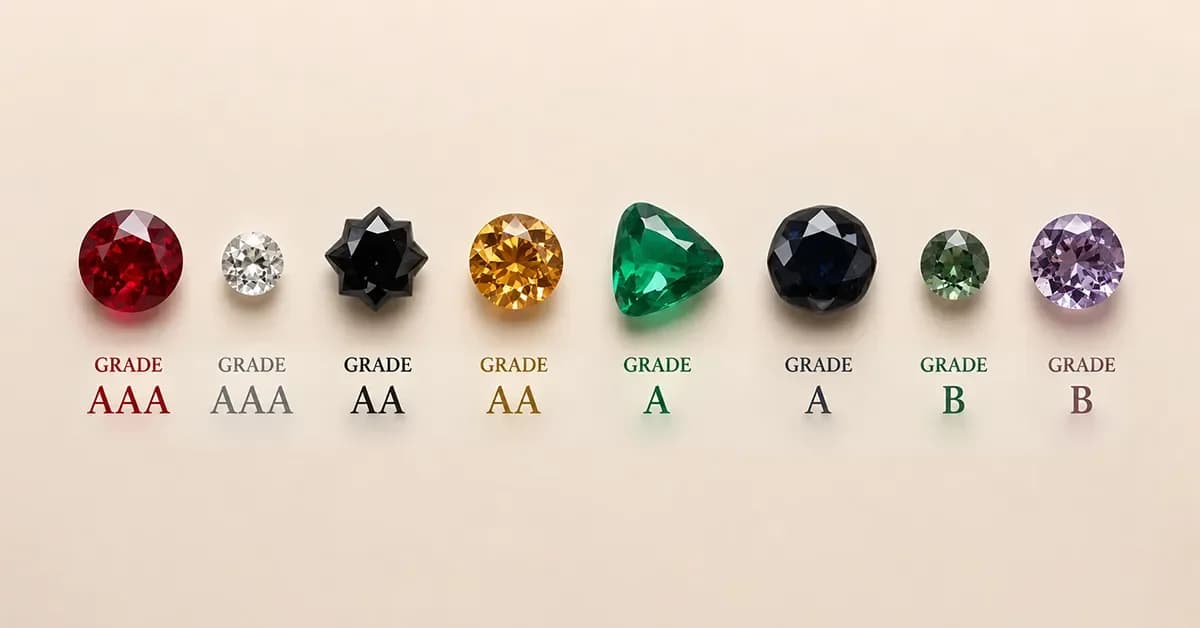
Gemstone grading is when a trained gemologist assesses a gemstone's quality, using tools like a loupe and microscope to examine it closely. For coloured gemstones, it means looking at four familiar factors: colour, clarity, cut, and carat weight, plus two that carry far more weight than they do for diamonds: treatment and origin. Unlike diamonds, there's no single universal scale coloured gemstones are measured against; each gem type has its own benchmark for what counts as fine quality.
15 Questions Buyers Usually Ask About Coloured Gemstone Grading
1. Which factor is the most important in gemstone grading — colour or clarity?
When it comes to grading a coloured gemstone, colour always dominates clarity. Colour is the first noticeable feature of a gemstone and the main driver of its price. Does clarity matter in coloured gemstones? Well, clarity matters too, but in coloured gems it takes a back seat to colour. Minor inclusions are generally accepted as long as they don't visibly disrupt the stone's beauty. A ruby with rich, even colour and a few minor inclusions will outsell a paler stone that's technically "cleaner." The reason is simple, people like gemstones because of their dazzling and vibrant colours.
2. How is colour grading different for each gemstone type (Ruby vs. Emerald vs. Sapphire)?
Here’s a detailed structure which will help you understand how these three gemstones (Ruby, Emerald, and Sapphire) are colour graded.
|
Gemstone |
What "Top-Grade" Colour Looks Like |
A Defect in this Gem Type |
|
Ruby |
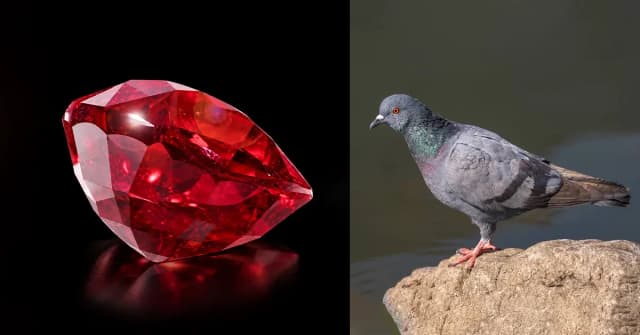
Vivid, slightly purplish red, often called "pigeonblood" |
Colour that's too brownish, orangey, or pale |
|
Emerald |
Rich green to bluish-green, evenly saturated |
Colour that's too yellowish or washed out |
|
Sapphire |
Velvety royal or cornflower blue, even saturation |
Dark, "sleepy" zones or greyish undertones |
3. Does a gemstone certificate guarantee its value?
This is the most common misunderstanding amongst the gemstone buyers. A certificate only mentions the identity and quality characteristics of the gemstone and does not confirm its monetary value. There’s a separate document (appraisal) which does confirm the monetary value of a gemstone. Value still depends on market demand, the seller's pricing, and current market conditions at the time of purchase.
4. What's the difference between a grading report and an appraisal?
A grading report describes the stone’s identity, measurements, colour, clarity, and any treatments found. An appraisal, on the other hand, goes a step further and estimates the stone's monetary worth, based on current market demand and the quality documented in the grading report. Reputable sellers typically provide the former; insurance usually requires the latter.
5. Are treated gemstones graded differently than untreated ones?
Gemstones are usually graded on the same colour-clarity-cut-carat basis, but the treatment status is disclosed separately and affects the value of a gemstone significantly. Some of the most common treatments are:
- Heat Treatment: The gemstones are heated to high temperatures to improve colour and clarity, most common in rubies and sapphires.
- Oiling: Colourless oil (or sometimes resin) is used to fill surface-reaching fractures, mostly in emeralds, to improve apparent clarity.
- Fracture Filling: It is similar to oiling but uses glass or polymer resin instead of oil, often to fill larger cavities. It’s more invasive than oiling and typically lowers value more noticeably.
These are all standard practices and are not inherently disclosed but must be disclosed. This changes the price of the commodity. An untreated stone of comparable visual quality will almost always cost more than a treated one, sometimes substantially more.
6. Why don't gemstones have a universal grading scale like diamonds?
The grading criteria for diamonds and gemstones are very different. Diamonds are graded on colourlessness, which is a single, measurable axis. On the other hand, gemstones are graded on the basis of their hue, tone, and saturation across dozens of species, each with its own natural range of inclusions and colour. Trying to force one scale across every gem type would flatten differences that actually matter to buyers.
7. What does "origin" mean on a grading report, and does it affect price?
Origin refers to the country or region a stone was mined in, confirmed through inclusion patterns and trace-element analysis rather than paperwork. The origin of a gemstone can affect its price considerably. Stones from historically significant sources like Kashmir sapphires, Burmese rubies, and Colombian emeralds can sell for several times more than similar-quality stones from less prestigious sources, purely because of where they came from. Do not forget that the only reliable way to confirm origin is a report from a recognised lab.
8. Can two gemstones with the same grade have different prices?
Yes, two gemstones with the same grade can have different prices. A grading report captures measurable characteristics, but it doesn't capture everything a buyer might value. The exact shade preference, brilliance in person, cutting symmetry, or brand/seller reputation remain the decisions a buyer makes on the spot. Two stones with identical grades can also differ in origin or treatment history, both of which move price independently of the grade itself.
9. How do inclusions affect a coloured gemstone's grade?
Inclusions are tiny marks, lines, or specks that one can see inside the gemstone. These inclusions are formed naturally while the stone is growing underground. The value of inclusion depends upon the type of gemstone. For example, some gemstones, like aquamarine, almost always come out clean and clear. So if one of those has visible marks inside it, it's considered lower quality. But other gemstones, like emeralds, almost always have some inclusions. Even the most expensive, top-quality emeralds usually have a few visible marks, that's just normal for that stone.
10. What's considered "eye-clean" in coloured stones?
Eye-clean that there are no inclusions visible to a naked eye at normal viewing distance while examining a gemstone. A gemstone might have some inclusions when looked through a magnifying glass or jeweller’s loupe. We can conclude that, eye-clean isn’t about a gemstone being completely inclusion-free but about how clean it is from a buyer’s eye or from a naked eye.
11. Is a bigger carat weight always a better grade?
No, bigger carat weight does not always mean a better grade. Carat is the quantity or the weight of the gemstone, it does not define its quality. A larger stone with poor colour or heavy inclusions will grade and sell for less than a smaller stone with excellent colour and clarity. Carat weight is still one of the four core grading factors even though it isn't a quality measure on its own.
12. Which labs are the most trusted for coloured gemstone certification?
The most trusted labs for gemstone grading are:
- GIA(Gemological Institute of America): It is widely regarded as the global benchmark, especially for identification, origin reports, and treatment detection.
- AGL (American Gemological Laboratories): Known for detailed colour and quality descriptions, often used for high-value coloured stones in the US.
- Gübelin(Gübelin Gem Lab) (Switzerland): It is one of the most respected names for origin determination, especially on rubies, sapphires, and emeralds.
- SSEF (Swiss Gemmological Institute): This is another top-tier Swiss lab, frequently used alongside Gübelin for cross-verifying origin on high-value stones.
- GRS(GemResearch Swisslab): It is well known for origin reports and for its detailed treatment classification system.
- IGI(International Gemological Institute): widely used and accepted globally, including across Indian markets.
- GII(Gemological Institute of India): a government-recognised Indian laboratory, commonly used and accepted within the Indian gemstone trade.
13. Can grading be faked or manipulated?
Certificates from unrecognised or in-house "labs" can be inflated or inaccurate, which is why buyers should stick to independent, internationally recognised laboratories rather than reports issued by the seller itself. The above mentioned labs are some of the most trusted authorities worldwide.
14. Should I buy a graded or ungraded gemstone?
If you are looking forward to a meaningful purchase, always go for a graded gemstone. An ungraded stone might be perfectly genuine, but you have no independent confirmation of what you're buying. For anything you're paying a real price for, a report from a recognised lab is worth the cost.
15. How do I read a gemstone grading report?
|
Section on the Report |
What it Tells You |
What to Watch for |
|
Identification |
The gem species and variety |
Confirms it's the genuine mineral, not a simulant or synthetic |
|
Measurements and Shape |
Dimensions and cut shape |
Cross-check the stone matches the report |
|
Colour |
Described hue, tone, and saturation (e.g., "vivid blue") |
Compare against the gem type's known benchmark colour |
|
Clarity |
Type and visibility of inclusions |
Judge against what's normal for that specific gem |
|
Carat Weight |
The weight of the gemstone |
More weight doesn’t mean better quality |
|
Treatment |
Any heat, oiling, filling, dyeing, or other enhancement |
One of the two most price-sensitive lines on the whole report |
|
Origin |
Country/region the stone was mined in |
The other most price-sensitive line |
The Bottom Line
Grading a coloured gemstone is not about chasing a perfect grade or number like it is in the case of diamonds. It's about understanding what's normal for a specific gem, and knowing which details actually move its price. Colour usually matters the most, clarity expectations shift by the gem’s type, and the treatment or origin can change value more than the grade itself ever will. A small reminder: a grading report from a recognised lab isn’t a formality rather a protection. Why? Because it tells you what you’re actually buying, and not what you’re told what you’re buying. When in doubt, ask for the report, read the treatment and origin lines closely, and don't be afraid to ask a jeweller to walk you through it. It is always better to understand a stone before buying it.
FAQs
1. What is the most important factor in coloured gemstone grading?
Color is usually the most important grading factor, followed by clarity, cut, carat weight, and the gemstone's origin.
2. Does a gemstone certificate guarantee quality?
No, a certificate confirms the gemstone's identity and characteristics, but its overall quality and value still need expert evaluation.
3. Are coloured gemstones graded the same way as diamonds?
No, coloured gemstones are primarily graded on color quality, while diamonds follow the standardized 4Cs grading system.
4. Does the origin of a coloured gemstone affect its value?
Yes, gemstones from renowned origins such as Kashmir, Burma (Myanmar), and Colombia often command higher prices due to their rarity and reputation.
5. Why should I buy a lab-certified coloured gemstone?
A lab-certified gemstone provides assurance of authenticity, treatments, and key quality characteristics, helping buyers make informed decisions.

Priyanshi Yadav
Priyanshi Yadav is a content writer with a year of experience crafting engaging copy across lifestyle, fashion, and travel niches. Alongside writing, she manages social media and creates content that connects with audiences, bringing a sharp eye for PR and marketing trends to everything she does. When she's not writing for brands, you'll find her exploring new destinations, chasing the latest fashion moments, or curating content for her own lifestyle blog.