Where Do the World's Best Rubies, Sapphires, and Emeralds Actually Come From?
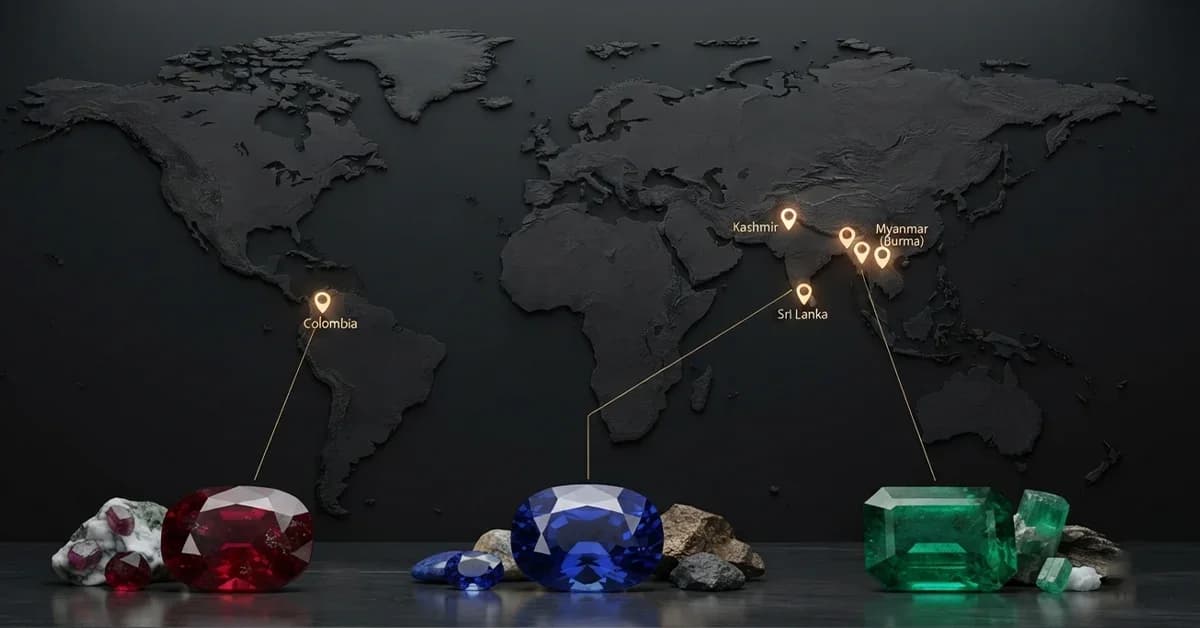
What truly makes a gemstone exceptional- the colour you see or the place it comes from?
Gemstones have captivated humans for centuries with their rarity, remarkable colours, and beauty.
Today, they remain valuable luxury products while also carrying cultural and historical significance.
Rubies, sapphires, and emeralds continue to captivate gem-enthusiasts and remain among the most demanded precious stones. While these gemstones are found across several regions, not every source produces stones considered exceptional.
This makes understanding the origins of gemstones essential when exploring the best gemstones of the world. Let’s explore their most renowned sources.
Why Does Gemstone Origin Matter?
A gemstone’s origin can offer valuable insight about the geological conditions in which it formed. It can influence how a ruby, sapphire, or emerald is understood, evaluated, and valued in the market.
- Helps identify distinctive characteristics — Certain regions are known for gemstones with particular colours, clarity, or optical features.
- Influences market value — A prestigious origin can add a premium to an exceptional gemstone, especially when its origin is confirmed by a reputable laboratory.
- Adds rarity and desirability — Gemstones from historically important or limited sources become more desirable for collectors.
- Supports informed buying — Knowing a gemstone’s origin, along with its quality and treatment status, helps buyers make more informed decisions.
The World’s Finest Gemstones and Their Famous Origins
|
Gemstone |
Best-Known Origin |
Why It Is Famous |
|
Ruby |
Mogok, Myanmar |
Famous for vivid red colour, strong fluorescence and exceptional “pigeon’s blood” rubies. |
|
Sapphire |
Kashmir, India |
Renowned for its rare velvety cornflower-blue colour and exceptional collector value. |
|
Emerald |
Muzo, Colombia |
Celebrated for its rich, saturated “Muzo green” colour emeralds. |
Where Do the World’s Best Rubies Come From?
Rubies are among the world’s most demanded natural gemstones. They are prized for their intense red colour and rarity.They are the red variety of corundum (aluminium oxide), with trace chromium responsible for their characteristic red colour.
Rubies are produced in various parts of the world, but few parts are famous for producing exceptional stones.
1. Myanmar (Mogok) - The Benchmark for Fine Rubies
The Mogok Valley in Myanmar (Burma) has long been regarded as the benchmark for exceptional rubies.
Its finest stones are renowned for vivid, saturated red colour, often described as “pigeon’s blood” red, along with strong red fluorescence that can enhance their visual appearance.
Burmese rubies are the most desired among collectors and the luxury jewellery market.
2. Mozambique
According to GIA,Mozambique has become one of the most important ruby-producing regions in the modern gemstone industry, particularly through deposits in the Montepuez area of Cabo Delgado.
It is estimated at around 40% of all rubies by volume and 50–70% of faceted-quality stock in recent years. Mozambiquian rubies are famous for strong, saturated red colours.
3. Madagascar
According to mining sector of Mozambique report,Madagascar produces rubies in comparatively smaller quantities, but some deposits, notably Andilamena and Vatomandry, yield stones with attractive red and purplish-red colours.
4. Sri Lanka(Ceylon), Vietnam, Tanzania & Other Origins
Sri Lanka, Vietnam, Tanzania, Afghanistan and Pakistan are also recognised ruby sources, each producing stones with different colour characteristics, inclusions and geological features.
Sri Lankan rubies, for example, may show lighter or pinkish-red tones, while Vietnamese material can display attractive vivid reds and distinctive inclusions.
Where Are the World’s Finest Sapphires Found?
Sapphire is a variety of corundum; a mineral composed primarily of aluminium oxide. While pure corundum is colourless, trace elements such as iron and titanium give blue sapphire its characteristic colour.
Sapphires occur in many regions worldwide, but certain origins have earned a stronger reputation for producing exceptional stones.
1. Kashmir, India (The Benchmark for Fine Sapphires)
Kashmir sapphires are widely regarded as some of the finest blue sapphires ever found. Their signature velvety cornflower-blue colour is associated with microscopic rutile inclusions that create a soft, diffused appearance.
The historic deposits are now largely exhausted, making genuine Kashmir sapphires exceptionally rare.
2. Myanmar
According to GIA, The Mogok region of Myanmar has historically been an important source of fine sapphires. Burmese sapphires are known for their rich, saturated blue colours, ranging from royal blue to deeper shades, often combined with good transparency.
Although production is limited compared with some modern sources, exceptional unheated stones from Myanmar remain highly valued in the international gemstone market.
3. Sri Lanka
According to Lotus Gemology, Sri Lanka(Ceylon), has been an important sapphire-producing region for centuries. Ceylon sapphires are admired for their bright, lively blue colours, ranging from cornflower to royal blue.
Sri Lanka is also famous for producing padparadscha sapphires, recognised for their distinctive pink orange colour. Its long mining history and continued production make Sri Lanka one of the most important sources of fine sapphires.
4. Madagascar, Montana & Other Notable Origins
Madagascar has emerged as a major modern source of high-quality sapphires, producing blue stones that can resemble material from Sri Lanka and, in exceptional cases, approach the quality of traditional origins.
Montana in the USA, particularly the Yogo Gulch deposit, is known for smaller, often unheated sapphires with distinctive blue to violetish-blue colours.
Other sapphire origins include Thailand, Cambodia, Vietnam, Australia, Tanzania, Nigeria and China, each contributing stones with their own colour and quality characteristics.
Which Country Has the Best Emeralds?
Emerald is a green variety of beryl, a mineral composed primarily of beryllium, aluminium, silicon and oxygen.
Its characteristic green colour is mainly caused by trace amounts of chromium and/or vanadium. Although emeralds are mined in several countries, Colombia has long held a prestigious position in the global emerald trade.
1. Colombia - The Benchmark for Fine Emeralds
Colombia is widely regarded as the leading origin for exceptional emeralds, with Muzo being particularly renowned. Muzo emeralds are celebrated for their rich, saturated green colour and distinctive velvety appearance, often referred to as “Muzo green.”
Other important Colombian sources include Chivor, known for attractive bluish-green stones.
Coscuez, which produces emeralds across a broader range of green tones. Exceptional Colombian emeralds can command significant premiums because of their colour, rarity and origin prestige.
2. Zambia
Zambia has become one of the world's most important modern emerald-producing regions. Zambian emeralds are often characterised by deep green to slightly bluish-green colours and can offer higher clarity than many Colombian stones.
3. Brazil
Brazil produces emeralds in a range of green colours, from lighter grass-green to more saturated shades. Some Brazilian emeralds can have impressive clarity and appearance, making the country an important contributor to the international emerald market.
4. Other Notable Origins
Several other countries produce natural emeralds with distinctive characteristics. Afghanistan's Panjshir Valley is known for vivid green emeralds, while Zimbabwe's Sandawana is particularly recognised for smaller stones with intense colour.
Ethiopia and Russia's Ural Mountains have also produced emeralds of collector interest.
FAQs
1. Does Gemstone Origin Affect Quality?
Gemstone origin does not automatically determine quality. However, different geological environments can produce stones with characteristic colour, inclusions and other properties, which is why certain origins are associated with particular quality characteristics.
2. Does Gemstone Origin Affect Price?
Yes, origin can significantly affect the price of a coloured gemstone, particularly when a prestigious origin is associated with exceptional quality and rarity.
For example, fine untreated Kashmir sapphires can command substantially higher prices than comparable stones from other origins.
3. Why Are Colombian Emeralds So Valuable?
Colombian emeralds have long been highly valued for their rich green colour and distinctive gemological characteristics, as well as their historical reputation in the international gemstone trade.
4. Which Countries Produce Natural Gemstones?
Natural gemstones are mined in many countries, with different regions known for particular varieties.
Major sources include Myanmar, Sri Lanka, Colombia, Zambia, Mozambique, Madagascar, Brazil, Australia, Afghanistan and Tanzania, among others; the important producing countries vary depending on the gemstone
Conclusion
The world’s finest coloured gemstones come from remarkable geological regions, each with its own story and characteristics.
From the renowned ruby origins of Myanmar and Mozambique to the historic sapphire origins of Kashmir and Sri Lanka, and the celebrated emerald origins of Colombia and Zambia, geography plays an important role in the gemstone world.
But origin alone does not determine quality or value. Colour, clarity, treatments, rarity and certification also matter.
Understanding where the best rubies, emeralds and sapphires come from helps buyers appreciate these natural gemstones beyond their beauty.
Stay updated with GemstoneToday for more gemstone-related information.

Priyanshi Yadav
Priyanshi Yadav is a content writer with a year of experience crafting engaging copy across lifestyle, fashion, and travel niches. Alongside writing, she manages social media and creates content that connects with audiences, bringing a sharp eye for PR and marketing trends to everything she does. When she's not writing for brands, you'll find her exploring new destinations, chasing the latest fashion moments, or curating content for her own lifestyle blog.