Gemstone Cuts & Shapes Explained: Which One Maximizes Beauty and Value?
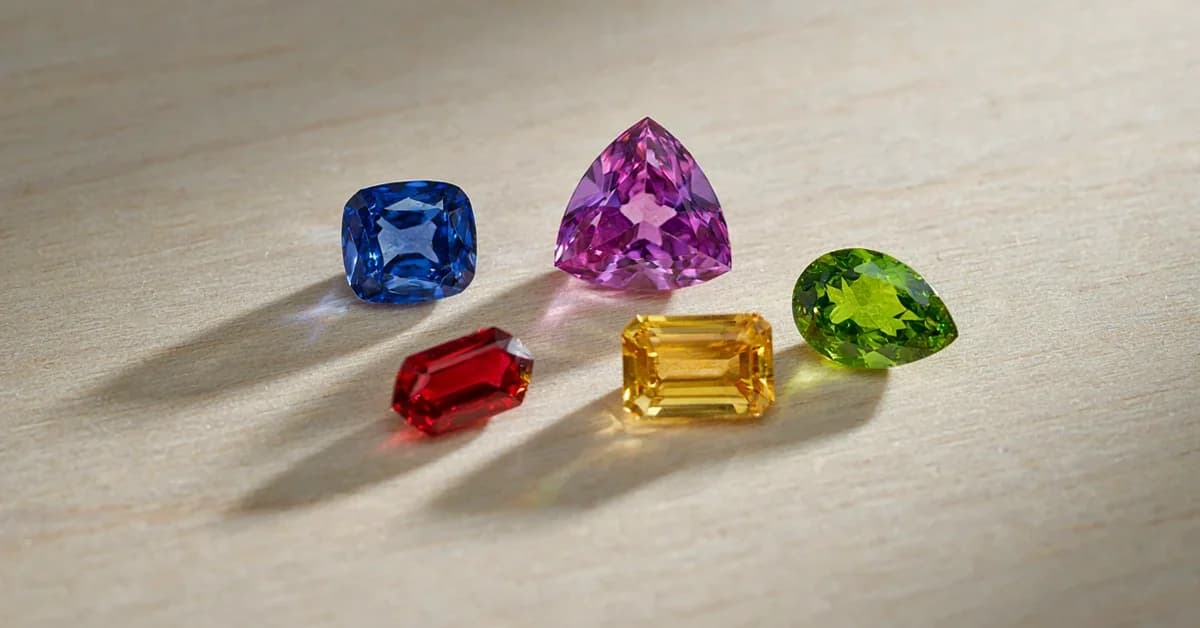
A gemstone does not reveal its entire characteristics in the rough state. It takes careful cutting to bring out the color, light, and visual appeal hidden within it.
Cut is the most underappreciated aspect of a gemstone’s 4c; it determines the look and how long a gemstone lasts. The right cut can unlock the potential of a gemstone, while a wrong one can diminish its value.
But cutting isn't as simple as shaping a stone; cutters can lose a significant amount of stone in the process, so their decisions matter.
Understanding gemstone cuts and shapes doesn’t require a degree in gemology. This guide explains the difference between shape and cut, popular cutting styles, and why it actually matters.
Difference Between Gemstone Shape and Cut
In jewellery, gemstone shape and cut are often used interchangeably, but they are two different aspects of a stone. Shape refers to the gemstone’s face-up outline, while cut describes how the stone is fashioned, including its facets, proportions and angles.
The table provided below will help to understand the difference more accurately.
|
Aspect |
Gemstone Shape |
Gemstone Cut |
|
Definition |
The gemstone’s overall outline or silhouette when viewed from above |
The way the gemstone is fashioned, faceted and polished |
|
What it describes |
The external appearance |
Facet arrangement, proportions, angles and overall light performance. |
|
Examples |
Round, oval, cushion, pear, marquise, heart |
Brilliant, step, mixed, cabochon |
|
Main purpose |
Determines the stone’s visual outline and style |
Influences how light interacts with the stone |
Why Cut Actually Matters
A gemstone’s cut plays a major role in its face-up appearance. In a faceted gemstone, the placement, angles, proportions, symmetry and polish of the facets influence how light enters, travels through and exits the stone.
It Affects Light Performance
Cut determines how a gemstone interacts when exposed to light. Well-planned facets and suitable proportions can lead to brightness and sparkle, while poor cutting can create dull areas.
Excessive light return may make a strongly coloured stone appear washed out, while excessive depth can make the appearance of the gemstone dull and dark.
It Affects Wearability
Cut also has practical implications for durability and setting. Extremely thin girdles can be more vulnerable to chipping, while sharp corners and points can receive impact more easily. Cutters may leave these areas slightly thicker.
However, cut alone does not determine whether a gemstone is suitable for everyday wear. Wearability also depends on the gem’s hardness, toughness, cleavage, fracture filling, treatments, setting design, and how the jewellery is used.
It Affects Price
Cut quality can influence a gemstone’s market value, but it is not a standalone or universally ranked measure of value. GIA describes cut quality as including the quality of facet placement and the effects of proportions, symmetry and polish.
A well-cut gemstone may be more desirable because it shows attractive colour, brightness, contrast and craftsmanship. However, gemstone value also depends on factors such as colour, clarity, size, rarity, origin, treatments and market demand.
A larger gemstone is therefore not automatically more valuable. Excessive depth, bulging, poor proportions or windowing can make gemstone larger without improving the stone’s face-up appearance
How to Choose the Best Cut and Shape for a Gemstone
Consider the gemstone type: Different gems respond differently to cutting because their optical properties, durability and colour distribution vary.
Assess the colour: Choose a cut that presents the gemstone’s hue, tone and saturation attractively rather than making it appear too pale, dark or uneven.
Check for proportions and symmetry: Well-balanced proportions and aligned facets make the gemstone bright, while uneven cutting can create dull areas.
Match the jewellery design: Some shapes suit particular designs better; elongated stones may work well in rings and pendants, while smaller shapes often suit earrings or side-stone settings.
Compare face-up appearance: Judge the gemstone from above and compare its visible size, colour and brightness rather than relying only on carat weight.
Check for durability: Sharp corners, thin edges and vulnerable inclusions are prone to break and they may need protective prongs or a bezel setting.
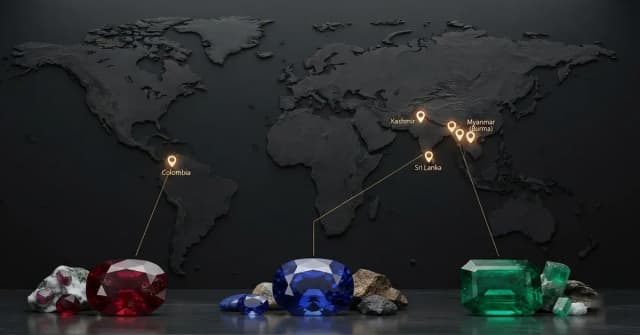
Must Read: Where Do the World's Best Rubies, Sapphires, and Emeralds Actually Come From?
Popular Gemstone Cuts

Brilliant Cut
Brilliant cuts use triangular and kite-shaped facets arranged to create lively flashes of reflected light. They are best for transparent gemstones where sparkle and brightness are priorities, including diamond, sapphire, ruby and wide varieties of quartz.
Step Cut
Step cuts feature broad, usually rectangular facets arranged in parallel rows that resemble steps. They produce elegant flashes and can showcase a gemstone’s colour and clarity, making them well suited to transparent stones such as emerald, sapphire and tourmaline.
Mixed Cut
Mixed cuts combine brilliant-style and step-style faceting, commonly using brilliant facets on the crown and step facets on the pavilion. This combination offers a balance between sparkle, colour presentation and weight retention, so it is widely used for coloured gemstones in shapes such as oval, cushion and pear.
Cabochon Cut
A cabochon has a smooth, polished, curved surface rather than conventional facets, usually with a domed top and a flat or slightly curved base. It is particularly suitable for opaque or translucent gemstones and materials that display phenomena such as asterism, chatoyancy or adularescence, including star ruby, cat’s-eye chrysoberyl and moonstone.
Must Read: Gemology For Beginners: Everything You Need to Know About Gemstones
Popular Gemstone Shapes

- Round: Round shape is all rounder shape that works with both faceted and cabocohns gemstones, it is a classic versatile with balanced outline.
- Oval: It is an elongated version of the round shape that make gemstone look bigger when seen from above
- Cushion: A square or rectangular shape with rounded corners, often chosen for its soft, romantic, and slightly vintage look.
- Emerald: Usually a rectangular shape with cut corners; despite its name, this shape can be used for many gemstones and is commonly paired with step faceting.
- Princess: A square or rectangular shape with sharp or slightly modified corners, valued for its clean, modern appearance.
- Pear: A teardrop-shaped outline with one rounded end and one pointed end, often used in pendants, earrings and distinctive rings.
- Marquise: An elongated shape with curved sides and two pointed ends, giving the gemstone a slender and lengthened appearance.
- Heart: A heart-shaped outline with a cleft at the top and a pointed base, making it a popular choice for romantic jewellery designs.
- Trillion: A triangular shape with straight or slightly curved sides, often used as a centre stone or accent gemstone.
- Radiant: A square or rectangular outline with bevelled corners, usually combined with brilliant-style faceting for a lively appearance.
- Asscher: A square, step-cut shape with deeply cut corners and a geometric, Art Deco-inspired appearance.
- Baguette: A narrow rectangular shape with step-cut facets, commonly used as a side stone or accent in jewellery.
- Hexagon: A six-sided shape that gives a gemstone a distinctive geometric look and is often selected for contemporary or unusual designs.
FAQs
1. What is the difference between a gemstone cut and shape?
A gemstone’s shape refers to its face-up outline, such as round, oval, pear or cushion. Its cut generally describes how the stone has been fashioned, including its facet arrangement, proportions, angles, symmetry and polish.
In commercial jewellery descriptions, “cut” is sometimes used more broadly to include both shape and faceting style.
2. Which gemstone cut gives the most sparkle?
Brilliant-style cuts are generally designed to produce lively reflections and strong light performance.
However, sparkle also depends on the gemstone’s material, refractive index, transparency, proportions, facet quality, polish and lighting conditions. A brilliant cut is not automatically the sparkliest choice for every gemstone.
3. Does gemstone cut affect its value?
Yes, cut quality can influence a gemstone’s desirability and value, but it is not the only factor. Colour, clarity, transparency, size, rarity, origin, treatments, shape, craftsmanship and market demand can also affect price.
The relative importance of each factor varies according to the gemstone and market.
4. Which gemstone shape is the most valuable?
There is no single gemstone shape that is always the most valuable.
Round, oval, cushion, pear, marquise and other shapes can command different prices depending on the gemstone, quality, rarity, cutting quality and current market preferences.
5. How does cutting affect a gemstone’s colour?
Cutting influences how light travels through a gemstone and therefore how its colour, saturation, brightness and reflections appear.
A cutter may balance light return with colour intensity because excessive light can sometimes make a strongly coloured gemstone appear lighter, while excessive depth or dark areas may make it appear too dark.
Cutting can change the way colour is perceived, but it does not change the gemstone’s underlying chemical composition or inherent body colour.
6. What is a cabochon-cut gemstone?
A cabochon is a gemstone fashioned with a smooth, polished, curved surface rather than conventional flat facets.
It commonly has a domed top and a flat or slightly curved base. Cabochons are often used for opaque or translucent materials and for gemstones that display optical phenomena.
Chatoyancy produces a narrow, moving cat’s-eye band, while asterism produces a star-like effect. These phenomena are commonly displayed by domed cabochons when the gemstone is correctly oriented and polished
7. Does a heavier gemstone have more value than a well-cut smaller gemstone?
Not necessarily. Carat weight alone does not determine a coloured gemstone’s value. A heavier stone with excessive depth, poor proportions or windowing may be less desirable than a smaller gemstone with attractive colour, transparency and well-executed cutting.
Final Verdict
There is no single best gemstone cut that works for every stone. The right choice depends on the gem’s colour, clarity, durability, optical properties and the character of the rough material.
A brilliant cut can bring lively sparkle, while step or mixed cuts may allow rich colour to take centre stage. For gemstones known for effects such as asterism or chatoyancy, a cabochon may be the better choice.
Ultimately, choosing a gemstone shape based only on fashion is not enough. What matters most is how well the cut works with the stone itself, bringing out its natural beauty while maintaining durability and value.
Stay updated with GemstoneToday for more gemstone related information.

Priyanshi Yadav
Priyanshi Yadav is a content writer with a year of experience crafting engaging copy across lifestyle, fashion, and travel niches. Alongside writing, she manages social media and creates content that connects with audiences, bringing a sharp eye for PR and marketing trends to everything she does. When she's not writing for brands, you'll find her exploring new destinations, chasing the latest fashion moments, or curating content for her own lifestyle blog.