From Mine to Market: The Journey of Rough Gemstones in Global Trade
Introduction
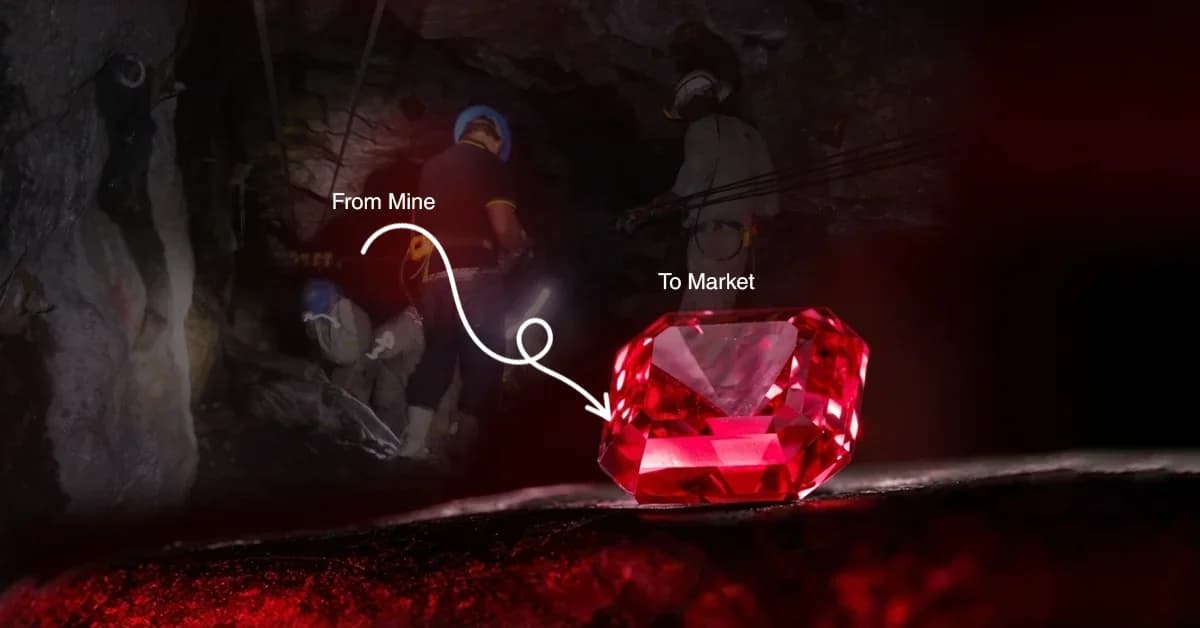
There is something really beautiful and magical about gemstones before they are cut. They have no sparkle, no polish done to them, no showroom lightings. They are in their original form which is raw and an unassuming fragment of the earth. However, what you must be unaware of is that behind every polished, carefully curated gemstone whether it is an emerald or a sapphire is a complex and unseen journey. This unseen journey is the story of rough gemstones which not just geological, but it has human, economic and deep global components as well.
All the gemstones come from remote mining regions and make their way to high-end jewellery stores. The path which these rough gemstones have to cover to become the polished version is anything but straightforward. The aim of this blog is to walk through the mining to market supply chain and unravel how these rough stones move across continents and pass through countless hands to finally become the finished gem which is admired by all.
Where It All Begins: Mining Gemstones
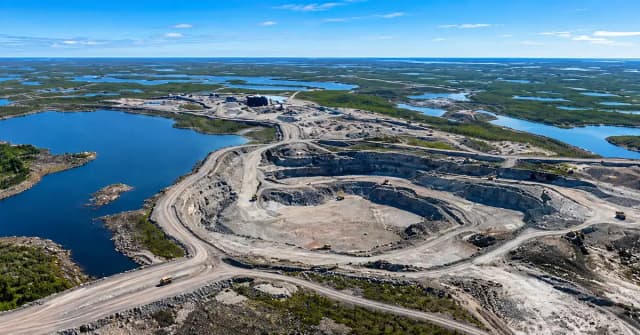
The journey of rough gemstones starts right from when they are mined from within the earth. But the important bit is that mining gemstones is not a uniform process. The process differs on the basis of geography, geology and even the available resources to mine them.
Below are some of the types of gemstone mining and the human side of mining as well.
Types of Gemstone Mining
Gemstone mining is mainly of three types; those are as follows:
- First is the artisanal mining which is done on small scale, it is labour intensive and use basic tools for mining.
- Second is the industrial mining which is done on a larger scale with machines and a structured process.
- Lastly there is alluvial mining which is the extraction of gemstones from the riverbed and sediments.
The industry finding is that about 80% gemstone mining is still done through the artisanal mining which also shows how dependent this industry is on small communities in spite of the larger cooperations.
The Human Side of Mining
If we look at the human side of this process, then it is not a glamorous one. Mining involves physical risks, unpredictable yields and usually unstable working conditions. Nevertheless, even though is process involving lot many risks, in countries like Africa and Asia, it is a mode of primary livelihood.
At the stage when human is involved, stones are still embedded in rock and is mixed with ravel. Only people with experience or distinguished potential can identify the real value behind the gemstone extracted.
Sorting, Grading, and First-Level Trading
Next comes the sorting, grading and first-level trading. The is the part which comes when the stones are extracted then they g through this process. This is where the rough gemstone supply chain initiates from and take shape. Noticeable thing to note in this process is as follows:
What Happens Here?
The process involves:
- Separating stones according to their size, colour and clarity.
- The high-quality pieces are identified for their cutting.
- And the lower-grade stones or materials are sold in bulk.
The interesting and intriguing bit here is that rough gemstones hardly ever go directly from miner to the exporters, they instead go through a web of intermediaries. For a matter of fact, stones can change multiple hands which could even be up to ten times before they even leave the source country.
Local Trading Hub
There is also a system of local trading hubs which is the informal market which acts as the first pint of sale. All kinds of people like buyers, traders, and brokers gather together in hubs to negotiate deals. These markets are often times chaotic but is equally critical to the gemstone trade ecosystem.
The Role of Middlemen in the Gemstone Trade
When we think about it, we might see the role of middlemen might be unnecessary but in reality, it is an essential part of how the gemstone sourcing process works. Let’s have a look at what is the need of so many intermediaries all at once.
Why So Many Intermediaries?
- Intermediaries act as the access to global buyers which often the miners lack.
- There are export regulations which requires licensed traders.
- Logistics and transport need coordination.
The work of a middlemen is to consolidate supply, manage risk, and connect remote mining areas to the international market. However, the biggest issue which contributes to the biggest challenges in the industry is the lack of transparency. As gemstones are bought and resold several times, their exact origin becomes difficult to trace.
Export and Global Distribution
After the gemstone is extracted from the earth’s surface, after which it is sorted, goes through the middlemen and local traders, these rough stones then enter the international market.
Key Exporting Countries
According to global trade data, countries like Tanzania, Kenya, and India are the major exporters of rough gemstone. Whereas places like Thailand, China, and India come in the list of top importers. Below is a list of all the major trading hubs.
- Bangkok or Thailand is known for the coloured gemstone trading.
- Jaipur in India is a global cutting and polishing hub.
- Hong Kong on the other hand is the key international trading gateway.
As we can see that Asia plays a central role in both processing and the distribution which makes it a powerhouse in the global gemstone trade.
Cutting and Polishing: Adding Value
Cutting and polishing is the main process where a gemstone’s real shine comes in front of everyone. This is the process of transformation. A proper cut and polis to the gemstone can make a dull and rough gemstone into something extraordinary.
The Lapidary Process
Although the name lapidary process seems confusing, let’s understand in a simpler and easier manner.
- The first step is evaluation which determines the best cut based on the internal structure of the gemstone.
- Then the stone is cut which provides it a shape and maximises its brilliance.
- Lastly the stone is polished which enhances its clarity and surface finish.
Cutting is a very essential part of enhancing a stone’s beauty because cutting is both a science and an art. A poor cut has the capacity to destroy the value of the stone while a skilled one which is cut magnificently can multiply the stone’s worth many times over.
There are several rough stones which are sent to the specialised cutting centres as the expertise varies from region to region.
Wholesale Markets and Global Retail
After all this, the gemstone before entering the retail market goes through the wholesale market. The flow of this is as follows:
- Wholesalers buy the stones in bulk.
- Then the jewellery manufacturers incorporate these stones into designs.
- Lastly, the retailers sell these finished products to consumers.
This is the point where every gemstone has travelled through thousands of miles and passed through multiple stakeholders wherein each passing adds to the value and cost of the stone. This is the reason why the global gemstone industry generated billions of dollars annually which directly reflects the economic significance of this entire industry.
Challenges in the Rough Gemstone Supply Chain
Like mentioned prior as well, the journey of a gemstone from mine to market is not without any complication, or to put it, it is rather complicated. Some of the key issues are as follows:
- As these gemstones passes through so many hands it becomes difficult to trace the origin.
- There are serious ethical concerns, as it has been seen that there are unsafe labour and environmental damage.
- There is a big portion of the gemstone trade which operates outside the formal system which makes the regulations challenging.
- With the advancing technology there is a rise of lab-grown gemstones which has entered the natural supply chain which again complicates the authenticity checks.
The Rise of Ethical and Transparent Sourcing
There is a significant rise in the demand of ethical and transparent sourcing of the gemstone. The questions like where did the gemstone come from and who mined them along with under what conditions. There has been an industry shift which is to be taken into consideration.
- Industry has shifted to certification system as a proof of ethical sourcing.
- There is a block-chain based tracking system for transparency.
- There is a direct trace model being introduced in the market which reduces the work of intermediaries.
These are some of the changes that the gemstone market is aiming for bringing in accountability in the mining to market supply chain even though the adoption is still evolving.
Technology Reshaping the Gemstone Trade
With the help of technology there is a subtle shift in how the rough gemstones moves through the gemstone market. It involves innovations which makes an impact which are:
- AI based grading system.
- Satellite mapping for exploration.
- An online trading platform which will connect the buyers and seller directly.
These are some of the tools which are helping in reducing inefficiencies and improve people’s trust in the rough gemstone supply chain.
Conclusion
To conclude, we can say that now when you see a gemstone in a showroom, you will remember that it did not come directly. Rather the stone’s journey began from a fragment of a rock which was extracted from a remote area. After this it was passed through traders, crossed borders, survived various negotiations and underwent transformation before it reached to its final destination.
The journey of a rough gemstone is layered and complex and deeply human. The stone reflects beauty, realities of global trade, craftsmanship, and economic interdependence. When you understand this journey, it doesn’t just make gemstone interesting but also gives them meaning.

Durgesh Sharma
Durgesh Sharma is a passionate writer and certified gemstone expert with over four years of practical experience in the field of gemology. Alongside his creative writing journey, he specializes in helping individuals choose the right gemstones based on astrological principles and personal needs.
- Introduction
- Where It All Begins: Mining Gemstones
- Sorting, Grading, and First-Level Trading
- The Role of Middlemen in the Gemstone Trade
- Export and Global Distribution
- Cutting and Polishing: Adding Value
- Wholesale Markets and Global Retail
- Challenges in the Rough Gemstone Supply Chain
- The Rise of Ethical and Transparent Sourcing
- Technology Reshaping the Gemstone Trade
- Conclusion