Indian Gemstones: A Guide to Jaipur's Gem Cutting Industry and Native Stones
Introduction
There is a touch of rich and regal to Indian gemstones. It is not just about colours or the craftsmanship rather it is the history connected with each gemstone. From the ancient trades and their routes to the modern export markets, India has quietly but definitively shaped the global gem landscapes for centuries now. In today’s time India is one of the world’s most important centres for cutting, polishing and trading of coloured gemstones.
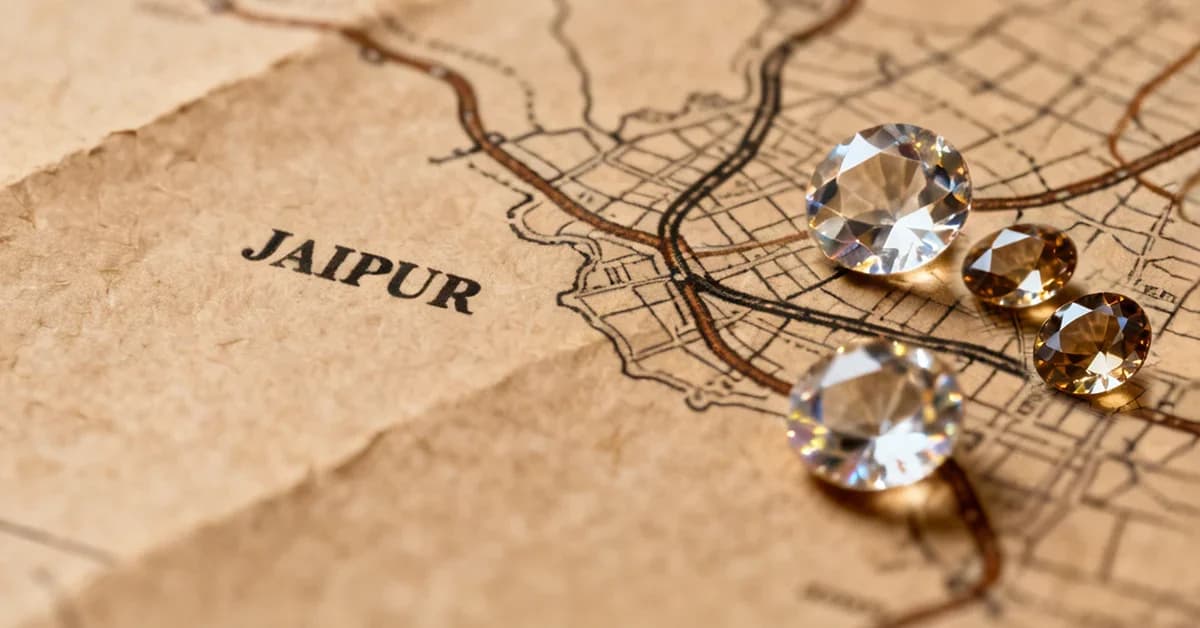
At the core of all this lies Jaipur in the heart of it. Jaipur is a city which does not just deal in gemstones rather it breathes and lives them as well. When you walk through the streets of Jaipur, you will find traders, cutters, designers, and exporters each and every person contributing to this well-developed ecosystem which has balanced blend of tradition with global demand.
With this guide we aim to guide you through the Jaipur gem industry along with exploring the Indian gem cutting and introduce you to the diverse world of Rajasthan gemstones and what goes beyond that as well.
India’s Legacy with Gemstones: More Than Just Adornment
India has a separate relationship with gemstones which can be traced back to thousands of years. Ancient texts specifically the Vedic astrology has classified these stones to be more symbolic and connected to astrology rather than them being just a piece of beauty. The concept of Navaratna, the nine sacred gemstones is still deeply embedded in Indian culture with great significance.
If we look into history, diamonds were first found in India along with other precious stones. the first time a diamond was found in India was in the 4th century in the Kollur mine near the Krishna River Delta which is also the original source of legendary diamond Koh-I-Noor. Although the mining activities have been reduced over time, the country has evolved into the global processing hub gaining an even more powerful standpoint.
Today’s time have gems from India which are less about extraction and more focused on transformation. This transformation is done through rough stones sourced through across the world and converted to polished masterpieces.
Jaipur: The Beating Heart of the Indian Gemstone Industry
Jaipur along with being the Pink city is also known as the gemstone capital of the world. The city’s journey of gem trade began over 300 years ago and now it has transformed into a global powerhouse. Jaipur in today’s time is known as the world’s largest centre for gemstone cutting and polishing especially for the coloured gemstones.
Now he things that makes Jaipur exceptional is not just their scale, but the specialisation of things mentioned below:
- The city processes over 300 varieties of gemstones which includes precious stones from emerald and rubies to lesser-known semi-precious stones as well.
- Jaipur handles around 90% of the total world’s emerald cutting.
- The city has a combination of traditional handcrafting along with modern techniques.
The entire gemstone system is inter-connected. The city has an unique industrial clutter in the best way in the form of small workshops, family-run businesses, export houses, and large-scale manufacturers.
This is the definition of Jaipur gem industry which is a perfect blend of heritage and high-volume global trade.
Inside Indian Gem Cutting: Craft Meets Precision
The journey of gemstone in Jaipur begins from the very core and is far from the final destination. As India imports a high volume of its rough stones, the real value addition happens during the processing of the rough.
Below is a detail walk-through of how the Indian gem cutting typically works:
Sourcing Rough Stones
Gemstones from all over the world are imported like Sri Lanka, Zambia, Mozambique, Brazil and many more to India. It is then brought to Jaipur traders often from the direct source of global partnerships and trade shows after which the rest of the processing begins.
Sorting and Grading
Before the process of cutting starts, the rough rock goes through a process of sorting and grading based on its colour, clarity, inclusions and potential yield. This is how a trader buys its piece for further process.
Cutting and Shaping
Cutting and shaping of the stone is the star of the show, this is where the real craftsmanship comes to play and matters the most. Jaipur artisans are known for their craftsmanship of maximising results and minimising wastage, which makes them better than others.
Faceting and Polishing
Faceting and polishing are a process which uses a mix of traditional tools and modern machines. Faceting is an important process for stone to enhance light reflection, and polishing is done to achieve the signature shine of the particular stone.
Quality Control
After all the sources, cutting and polishing each gemstone goes through a strict quality check before they enter the domestic or international market.
The most intriguing part of this is that even after the technological advancement, majority of this process is reliant on human expertise. Even with the presence of technology the last approval is done through the trained eye of an artisan.
The Role of Gem & Jewellery Export Promotion Council (GJEPC)
The conversation about Indian gemstones is incomplete without the mention of Gem & Jewellery Export Promotion Council (GJEPC). This organisation was established in 1966, which has played an important role in shaping India’s gem and jewellery exports. This council has over 7,000 members acting as a bridge between the government and the industry
The key contributions of this council are as follows:
- Promoting Indian gemstones in overseas markets.
- Organising trade shows and sourcing different events.
- Facilitating a connection between miners and manufacturers.
- Supporting skill development and various trainings.
This council has been behind import initiatives like the India Rough Gemstones Sourcing which helped people a steady supply of raw materials for the industry which was otherwise heavily dependent on import. In many different ways GJEPC has helped position India as a reliable global hub for gemstone processing.
Rajasthan Gemstones: The Land’s Natural Treasures
As we all know that India imports a large portion of its gemstones, it still has a rich variety of native stones especially from the state of Rajasthan. Some of these notable Rajasthan gemstones includes:
Garnet
Garnet is a gemstone with deep red hues and are widely used in traditional and modern jewellery. It is found in various parts of the state like Tonk, Ajmer, Bhilwara, Sikar, and more. Appearance wise garnet is sometimes even confused with ruby when seen by a layman.
Amethyst
Amethyst is a beautiful purple quartz variety. It is one of the abundant and popular affordable option known for its beauty and alternative purpose. It is found in areas like Rajgarh and Bhubani. Astrologically it is an alternative to blue sapphire with mild and similar effects.
Quartz
Clear and coloured quartz varieties are widely available and are often used in both jewellery and decorative objects. These are found in the deposits of Ajmer, Udaipur, Pali, Alwar, and Bharatpur.
Agate
Lastly, agate is known for its banded patterns and is commonly used in carvings and beads due to its intricate pattern. Agate is found in the areas of the southern and western parts of the state.
All the stones mentioned falls under the semi-precious categories and might hold as much value as a diamond or a ruby, but they play a vital role in the broader gemstone ecosystem, especially the semi-precious segment.
Why India Dominates the Global Gemstone Trade?
The reason behind India’s dominance in the gemstone industry is not because of its mines and production of the gemstone rather the mastery of skilfully bringing the best out of a rough stone. There are several factors which contributes to the dominance of the same, which are as follows:
Skilled Workforce
Jaipur has a generation of artisans that have passed down cutting and polishing techniques making them the experts in this area. Along with the expertise they have also gained popularity because of the minimum wastage that the craftsman work with.
Cost Efficiency
India has a high-quality processing at a very competitive price, which makes it ideal and attractive for global traders. This helps them to make better profits for themselves.
Infrastructure
India has cities like Jaipur which is the gemstone capital of world. The city has a developed ecosystem which specialises cluster with access to tools, training and markets.
Export Ecosystem
India has a gem and jewellery sector which contributes a big chuck to the export sector. Simultaneously Rajasthan plays a vital role in producing and finishing precious as well as semi-precious stones.
Variety and Scale
Jaipur in India process over 300 types of gemstones giving the country and unmatched range.
All these combinations combined has given gems from India synonymous with value, craftsmanship along with reliability.
Challenges Facing the Jaipur Gem Industry
Now that we have discussed all the positive points of the gem industry of India, let us also understand some of the challenges that the industry faces:
- Indian gemstone industry is mostly dependent on raw material from abroad making the supply chain vulnerable at the end.
- It gets difficult to have a quality control and ensuring uniform standard across the thousand small workshops.
- Now the competition has increased significantly that Thailand and China have started investing in the gem processing.
- Lab-grown gemstones are changing the market dynamics significantly.
However, from all the challenges mentioned above Jaipur is adapting to it. They are investing in certification laboratories, modern machinery along with global trade partnerships. These things are keeping the industry competitive and is still ahead of its competition.
The Future of Indian Gemstones
The future for Indian gemstones looks quite promising as the demand for coloured stones is increasing day by day even globally. Some of the key trends shaping the industry are:
- Shifting focus on certification and transparency.
- People becoming aware about ethical sourcing and demanding the same.
- Expansion of e-commerce and direct to customer sales which provides even more clarity to the customers.
- Using modern technology for cutting and grading along with the traditional approach.
With the strong institutional support and craft culture which is deeply rooted, the Jaipur gem industry is well-polished and still remains the global leader. One of the biggest reason for the same is also because they are ready to adapt new things for their betterment.
Conclusion
To conclude, Indian gemstones have a history to them which goes beyond their aesthetic value. These gemstones represent centuries of tradition, a deeply skilled workforce and an industry which is evolving globally.
Jaipur in the evolving industry is the centre of narrative because of its manufacturing hub and more likely because of its live archive of craftsmanship. Since the city accommodates over 300 stones, every stone from an emerald to a quartz carries the imprint of human skill and cultural heritage along with modern touch to it.
Even though the world is moving towards automation and technological advancement, the Indian gemstones still lie in something refreshing and simple such as human touch.

Durgesh Sharma
Durgesh Sharma is a passionate writer and certified gemstone expert with over four years of practical experience in the field of gemology. Alongside his creative writing journey, he specializes in helping individuals choose the right gemstones based on astrological principles and personal needs.
- Introduction
- India’s Legacy with Gemstones: More Than Just Adornment
- Jaipur: The Beating Heart of the Indian Gemstone Industry
- Inside Indian Gem Cutting: Craft Meets Precision
- The Role of Gem & Jewellery Export Promotion Council (GJEPC)
- Rajasthan Gemstones: The Land’s Natural Treasures
- Why India Dominates the Global Gemstone Trade?
- Challenges Facing the Jaipur Gem Industry
- The Future of Indian Gemstones
- Conclusion