What Is Heat Treatment in Gemstones?
Introduction
With increased knowledge about gemstones, we are sure, you must have heard the terms like ‘heat-treated’, ‘enhanced’, or ‘natural’ whenever you must have gone to buy a piece of gemstone or jewellery. However, there are many buyers for whom these terms are new and an obvious question arises: what is heat treatment in gemstones, and does it actually affect the value and authenticity of the gemstone?
The short answer to this question is: heat treatment gemstones are natural stones which have gone through a thorough procedure for enhancing their colour, clarity and overall appearance. Heat treatment is one of the oldest trick and also the most widely accepted forms of treating a gemstone. This process has been used for centuries now for the sole purpose of bringing out the best in a gemstone which is nature’s one of the best creations.
But there is a lot more to gemstones being heat treated that we will be breaking down for you in this blog. By the end of this blog, you will be able to tell what heat treatment of gemstones mean and make better decisions while gemstone shopping.
What is Heat Treatment in Gemstones?
To understand heat treatment in gemstones is simple terms, then it is a controlled process where a natural gemstone goes through high temperatures or other things for enhancing their visual qualities. To make a child understand, it is a second chance for a gemstone for developing their beauty which they could have get while the natural making under the Earth’s surface.
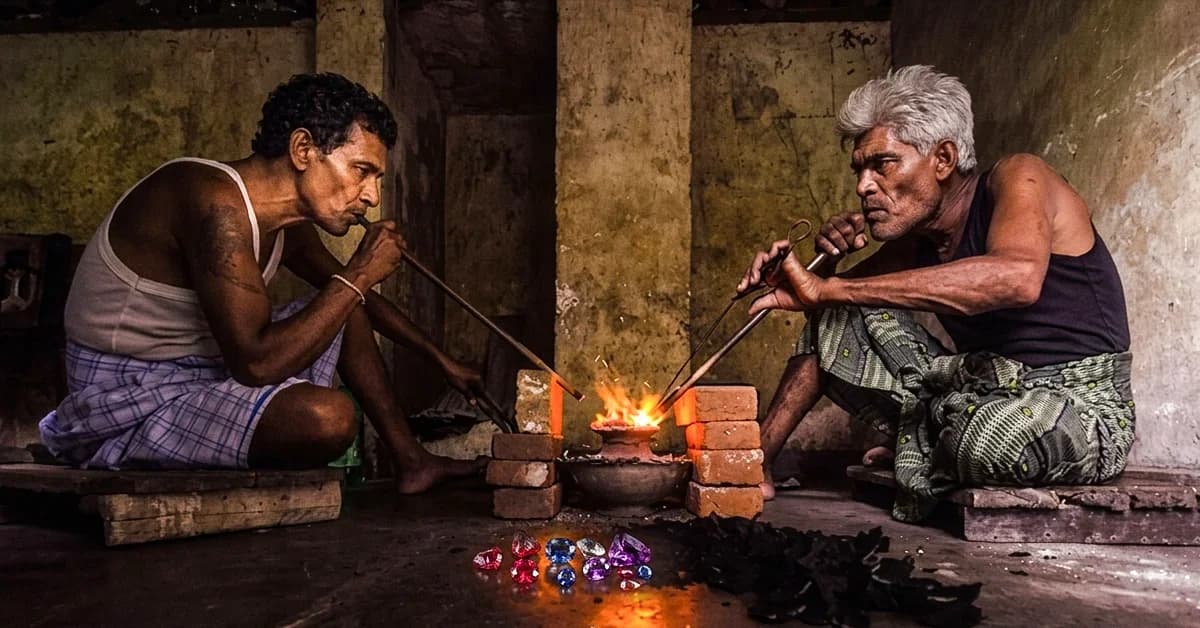
The process of heat treatment is as follows:
- The gemstone firstly is kept in a furnace or a kiln.
- Then it is heated to a particular temperature which could be sometimes over 1000 degree Celsius as well.
- Then the gemstones are slowly cooled under controlled conditions.
This process of treating a gemstone with heat alters its internal structure and how it eventually interacts with light. This was a technical explanation of what happens o a gemstone when treated with but for a buyer it doesn’t matters.
For buyers to understand better, heat treatment is a process through which a natural gemstone’s beautification is done without adding any foreign substance to them.
Why Are Gemstones Heat Treated?
Most of the gemstones we see in the market are not perfect as we see them placed in jewellery. There are hardly any gemstones that are perfect as hey come out of the earth’s surface. Those few perfect pieces are exceptionally high in price. Rest of the gemstones we have in the market have gone through some or the other treatment even if they are slightly done. Let’s have a look at the reason why heat treatment is done to the stones:
To Improve Colour
First and foremost, reason is to enhance the stone’s colour. Heat can intensify or even completely change a gemstone’s colour. Heat treatment can change the colour o such an extent that it can change a pale sapphire to a deep blue sapphire, a brownish tanzanite to a vibrant violet-blue colour or even an amethyst to a Citrine. Heat treatment is that powerful.
The reason behind gemstones changing colour under heat is that heating rearranges the trace elements and colour centres within the crystal or gemstone.
To Enhance Clarity
Nearly every stone has some internal inclusions as they are formed under extreme pressure under the earth’s surface. The heat has the potential of dissolving or reducing some of these inclusions. When a stone has less inclusions, it naturally looks cleaner and more transparent, enhancing its beauty and price for the unknown.
To Make Gems Market-Ready
Without heat treatment gemstones, high-quality stones would be rare, and rare stones are highly expensive. Henceforth, heat treatment to slightly included stones or slightly discoloured stones increases supply, making them beautiful and accessible to more buyers.
The Science Behind Heat Treatment
We have seen the basics and understood the heat treatment process in a very simple language, now let’s get to its science and make things interesting. Whenever a stone is heated some changes happen in them, those are as follows:
- Every gemstone/crystal has certain atoms in them which gain energy.
- Due to immense heat, they move inside the structure.
- Bonds break and reform then.
- Due to these changes the colour causing defects are then altered.
These are all microscopic rearrangements which changes how light passes through the stone, this process directly affects colour and its clarity. You can understand it as less ‘altering’ the gemstone and more of finishing what nature once started but in a faster and more controlled environment.
Common Gemstones That Are Heat treated
There are certain gemstones in the market which are almost always treated, on the other hand there are other stones which are occasionally enhanced. Below is a list of both frequently enhance stones and rarely enhanced stones as well.
Frequently heat-treated gemstones are:
- Over 90% of sapphires in the market are treated.
- Ruby
- Tanzanite
- Aquamarine
- Tourmaline
- Often amethyst stone is treated to convert them in Citrine.
Rarely heated stones on the other hand are:
- Emerald is not heat treated, there are other treatments in the market done which is used for emerald.
- Opal can never be heat treated as heat can damage the stone entirely.
The list provided above is a comprehensive list as every stone reacts differently to heat, which is the reason why the process is done under controlled environment.
Types of Heat Treatment in Gemstones
Now let’s understand the different types of heat treatments done to the gemstones as every stone reacts differently and heat has a different effect on every stone as well:
Low-Temperature Heating
- With low temperature heating the stones gain subtle improvements.
- This process is difficult to detect as it is minor.
- This type of heat treatment is used for minor colour arrangements only.
High-Temperature Heating
- High-temperature heating is mostly used for stone which requires major colour transformations.
- This process removes inclusions close to completely.
- This process is common for ruby and sapphire.
Flux-Assisted Heating
- Flux assisted heating is a process where chemical is used for healing fractures in the stone to provide them smooth and clean look.
- This process improves clarity quite significantly.
Controlled Atmosphere Heating
- As we all know gemstones are made under the earth’s surface., hence they go through different gases of the environment as well. Therefore, in controlled atmosphere heating oxygen levels are adjusted.
- This change leads to the final colour outcome.
Heat Treated vs Untreated Gemstones
Heat treated gemstones and untreated gemstones are two subject where buyers get confused the most. To understand both the concept better, give a look at the points mentioned below:
Heat Treated Gemstones
- These stones are the more affordable variants of the natural stones.
- They are visually more enhanced.
- These are widely available in the market even in jewellery.
- Some of the treatments done to some are accepted in the industry as well.
Untreated Gemstones
- These are the rare pieces with high prices.
- The value of an untreated gemstone is close to 30-50% more than a treated stone.
- These stones are mostly preferred by collectors or investors or even the auction houses in the market.
Key point to be noted is that both the gemstones are real as not treatment s=done to a natural stone can make it synthetic or fake.
Is Heat Treatment Permanent?
Heat treatment is a permanent process in most of the cases. Unlike some other gemstones, heat treatment is the most typical, stable, and permanent process done to a stone. It means that:
- The colour will not fade over time after the gemstone has gone through heat treatment.
- If the stone is used in daily wear, then it won’t reverse the process.
These are the reasons why heat treatment is widely accepted in the jewellery industry.
Does Heat Treatment Affect Value?
The answer to the question: does heat treatment affect value is not straightforward rather it is in two-folds. The value prospect depends on context and the context being when the price is lowered and when it adds value to the stone.
- Heat treatment lowers value of a gemstone when it is compared to an untreated gemstone. Along with for collectors whose intention is to retrieve the most precious and natural purity stone.
- Heat treatment when adds value is when it improves dull stones, making them visually appealing, and increasing their useability in jewellery.
Without the process of heat treatment there are various jewellery pieces in the market which will not exist altogether.
Are Heat-Treated Stones Ethical?
Is selling heat-treated gemstones ethical is one of the biggest concern in the market these days.
The simple answer to this complicated question is yes. It is completely ethical to use heat-treated stones provided they are disclosed to the buyer beforehand. Heat treatment is actually:
- The industry standard.
- It is non-invasive which means that no foreign substance is added to the gemstone while heating them.
- It is actually compared to polishing or cutting.
The only major concern is when sellers misplace the information, that is when they fail to mention this to the buyers. Transparency is what is required and matters.
How To Identify Heat Treated Gemstones?
Heat treatment is not an easy process which can be detected with naked eye. It requires professional tools, some of the guidelines before you go buy a gemstone for yourself are:
- Always look for certification as good laboratory will mention in their report whether the stone is treated or not.
- Look at the price of the gemstone, if it is a flawless piece and still don’t bother your pocket then it is likely treated.
- Look for inclusions, mostly heat alters or melts the inclusions which is visible under a microscope.
However, in most of the cases only rely on lab tests and certification from a renowned laboratory.
Pros and Cons of Heat Treatment
Even though heat treatment is a great process for enhancing gemstone’s beauty and making them accessible to a larger group, everything has its pros and cons to it, let’s have a look at them:
Pros
- It enhances beauty
- It makes gemstones affordable.
- The results are permanent.
- It is widely accepted in the market.
Cons
- It is lower in value than an untreated stone.
- It required disclosure from the seller’s end.
- Some of the advanced treatments can be quite controversial.
Heat Treatment vs Other Gemstone Treatments
Now that we are understanding heat treatment, it is important not to confuse them with other treatments, therefore, look at the points and differentiation done below:
|
Treatment Type |
What it Does |
Common example |
|
Heat Treatment |
It enhances colour and clarity |
Sapphires and rubies |
|
Irradiation |
It alters colour using radiation |
Blue topaz |
|
Fracture filing |
It fills cracks with substances |
Emerald |
|
Dyeing |
It adds artificial colour to the stone. |
Agate |
Heat treatment is accepted in the market because it is closer to the natural geological process than some other alternatives done to the gemstones.
Conclusion
To conclude and answer the most asked question being what actually is heat treatment in gemstone?
The answer is that this is a process, neither a shortcut nor a trick. It is a process which has been established long back and is science backed for enhancing a stone’s natural beauty. This is a process where the process tries to replicate what happened under the earth’s surface with the gemstones but with more precision.
For buyer, however the key takeaways are- heat treatment is natural and is widely accepted; it offers better value to everyday jewellery and untreated stones are rare and expensive. The right choice for a heat-treated or untreated stone is based solely on your budget, visual appeal and personal preference.
If you are buying these stones for beauty and wearability, then heat-treated stones are the smartest option as they are pocket friendly. On the other hand, if you want to collect rare pieces or want to get into investing then opting for untreated gemstones are worth the premium. Either way understanding what a heat-treated stone is will help you make an informed decision for yourself.

Durgesh Sharma
Durgesh Sharma is a passionate writer and certified gemstone expert with over four years of practical experience in the field of gemology. Alongside his creative writing journey, he specializes in helping individuals choose the right gemstones based on astrological principles and personal needs.
- Introduction
- What is Heat Treatment in Gemstones?
- Why Are Gemstones Heat Treated?
- The Science Behind Heat Treatment
- Common Gemstones That Are Heat treated
- Types of Heat Treatment in Gemstones
- Heat Treated vs Untreated Gemstones
- Is Heat Treatment Permanent?
- Does Heat Treatment Affect Value?
- Are Heat-Treated Stones Ethical?
- How To Identify Heat Treated Gemstones?
- Pros and Cons of Heat Treatment
- Heat Treatment vs Other Gemstone Treatments
- Conclusion