Queen Elizabeth’s Gemstone Collection: A Royal Legacy
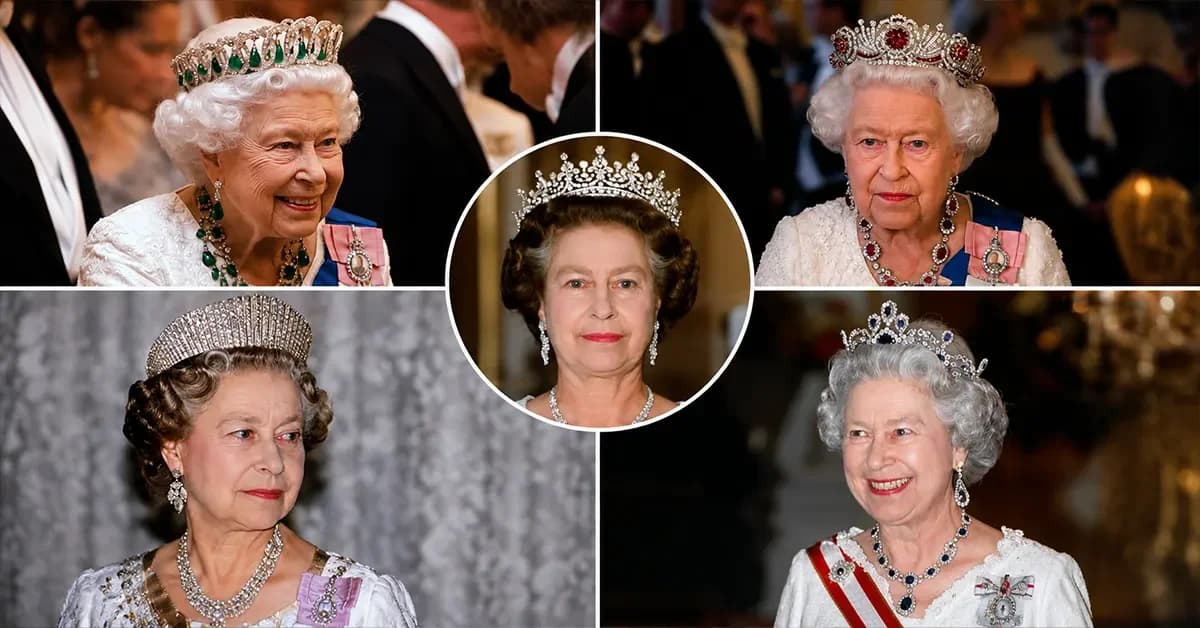
Queen Elizabeth II wasn't just the longest-reigning monarch in British history. She was also the custodian of one of the most extraordinary gemstone collections in the world. While much has been written about the Crown Jewels, Queen Elizabeth's gemstone collection went far beyond diamonds, featuring vivid sapphires, lush emeralds, timeless pearls, and deep rubies, many of which gifted by world leaders, inherited through generations, or chosen for their personal meaning. Each gemstone she wore told a story of coronations and royal tours, of marriage and motherhood, of diplomacy and duty. In this blog, we explore some of the famous gemstones worn by Queen Elizabeth from her collection and uncover the fascinating history behind them.
A Glimpse Into the Royal Jewelry Vault

Before diving into individual gemstones, let's understand what Queen Elizabeth's jewellery collection actually includes, because it's really two collections in one. The first is the Crown Jewels, a set of 142 pieces that are passed down from monarch to monarch rather than owned by any individual, including regalia like the Imperial State Crown and the Sovereign's Scepter. These belong to the Crown, not to Elizabeth personally, and upon her death they passed directly to King Charles III.
The second is her personal collection, the jewellery she inherited, received as gifts, or purchased herself over the course of her lifetime. By the time of her death, this private collection was estimated to include more than 300 pieces, and her personal collection of tiaras alone is believed to number around 50.
Sapphires: A Royal Favorite

Sapphires held a special place in the Queen's heart, largely because of where they came from: her father. King George VI gave his daughter a sapphire and diamond suite as a wedding present in 1947, originally made in 1850, consisting of a long necklace of oblong sapphires and a pair of square sapphire earrings. The set didn t look the same throughout the years, the Queen edited it herself over the decades.
In 1952, shortly after her accession, she had the necklace shortened by removing its largest central sapphire, and in 1959 she had that stone transformed into a sapphire pendant that could also be worn as a brooch. The most dramatic addition was yet to come in 1963 when the Queen commissioned a matching tiara and bracelet to complete the parure.
Emeralds in the Royal Collection
If there s one piece that defines the Queen s love for Emeralds, it will be the Vladimir Tiara. The jewelry piece is arguably her most famous headpiece, and one with a history dramatic enough for a film script. Queen Elizabeth II inherited the piece in 1953 and debuted it with its pearl drops at a Royal Film Performance that same year, later wearing it with emerald drops in place of the pearls, or with no drops at all, to operas, state dinners, and diplomatic receptions. She would strategically choose which version to wear as a nod to her hosts; pearls for a visit to the Vatican, emeralds for a visit with the President of Ireland.
The Vladimir Tiara was the last tiara Queen Elizabeth was photographed wearing in public, in December 2019, before the COVID-19 pandemic limited her subsequent appearances.
Must Read: Princess Diana and Her Love for Gemstones
Pearls: A Signature Royal Staple

If sapphires were sentimental and emeralds were dramatic, pearls were simply constant, the one gemstone Queen Elizabeth was rarely seen without. There s an interesting tradition behind it which began in childhood itself. The custom is said to originate from Queen Victoria, who gave her daughters and granddaughters a single pearl each birthday so they'd have enough for a necklace by adulthood. King George VI gave his daughter two pearls on a thin platinum chain every birthday. By the time she turned eighteen, she had enough to wear as an impressive three-strand necklace.
The scale of Queen Elizabeth s pearl collection was huge. Her jewelry collection overall was estimated to contain more than 300 items, including 98 brooches, 46 necklaces, 37 bracelets, 34 pairs of earrings, and 15 rings.
Rubies and Their Regal Symbolism

Rubies occupy a smaller but symbolically weighty place in Queen Elizabeth's collection. One of her most famous Ruby pieces was the Burmese Ruby Tiara. She wore it at moments that mattered. The tiara appeared during the New Zealand leg of her Silver Jubilee tour in 1977, and again decades later at an American state banquet at Buckingham Palace in 2019. Since her death, the tiara has been worn twice by Queen Camilla and is currently on public display in the King's Gallery at Buckingham Palace, making it one of the few personal pieces from her collection the public can see for themselves rather than only in photographs.
Rubies never dominated her wardrobe the way sapphires, pearls, or emeralds did, but that rarity is what makes the Burmese Ruby Tiara stand out.
Iconic Tiaras Featuring Mixed Gemstones

Some of the Queen's most fascinating tiaras weren't defined by a single gemstone at all. Instead they combined multiple stones into one piece, often through decades of alteration, inheritance, and royal "editing." The best example is the Delhi Durbar Tiara, a piece with one of the most tangled histories in the entire royal collection.
The tiara was commissioned by Queen Mary in 1911 to mark the Delhi Durbar, the ceremony proclaiming King George V Emperor of India. It was constructed from a dismantled Boucheron tiara along with other jewels, its diamonds forming lyres and scrolls wrapped in a complete circlet. Together, pieces like this show a different side of "iconic" royal jewelry: not single spectacular gemstones, but decades of royal women reworking, swapping, and reinventing the same stones into new forms.
FAQs
1. What was Queen Elizabeth's favorite gemstone?
She didn't have one single favorite, but pearls were arguably her most personal and most consistently worn gemstone, largely because of the sentimental birthday tradition tied to her father.
2. Did the Queen prefer colored gemstones over diamonds?
Her personal collection shows a clear love for colored stones like: sapphires, emeralds, rubies, and pearls all feature prominently, though diamonds remained present throughout.
3. Where are her gemstones kept today?
Most pieces are part of the Royal Collection or the personal jewelry now held by the monarchy, with select pieces already being worn by Queen Camilla and Catherine, Princess of Wales. Others remain in storage or occasionally go on public display, such as the Burmese Ruby Tiara at Buckingham Palace.
4. How many pieces are in Queen Elizabeth's gemstone collection?
Her personal collection was estimated to include more than 300 to 400 pieces by the end of her life, encompassing dozens of brooches, necklaces, bracelets, earrings, and around 50 tiaras.
Conclusion
More than any crown or ceremonial regalia, Queen Elizabeth's collection captures who she actually was. A woman who kept wearing her father's sapphires long after he was gone, who chose pearls or emeralds depending on which country she was visiting. These weren't just valuable stones; they were decisions, made again and again over a 73-year marriage and a 70-year reign, about which memories to carry into which room. That's what makes the collection worth understanding beyond its price tag.

Priyanshi Yadav
Priyanshi Yadav is a content writer with a year of experience crafting engaging copy across lifestyle, fashion, and travel niches. Alongside writing, she manages social media and creates content that connects with audiences, bringing a sharp eye for PR and marketing trends to everything she does. When she's not writing for brands, you'll find her exploring new destinations, chasing the latest fashion moments, or curating content for her own lifestyle blog.