How to Read a Lab Certificate for Gemstones?
Introduction
As a famous saying goes, buying a gemstone without a proper certification is like buying a car without checking its RC. They might look stunning but without a proper gemstone certificate is just a coloured stone which you bought solely on trust. This is a risky move specially in a market which has high percent of treatments, synthetic and imitations.
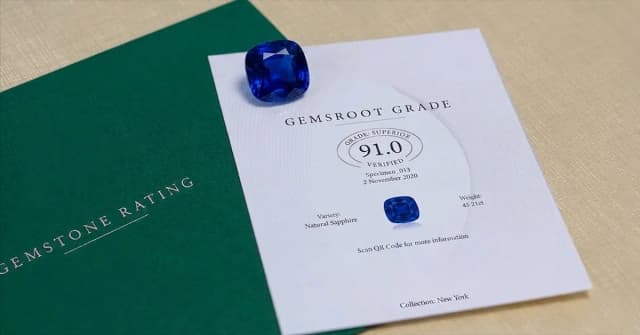
A lab certificate also called as a grading report is the strongest tool for a gemstone and to check its authenticity. This tool helps you identify exactly wat you are buying which is objectively independent and is also in technical detail. This blog is specially curated for your deep understanding of how to read a gemstone certificate report in a manner which will make sense. The objective of this blog to make it easier for you to read the certificate and understand it at the same time even if you are not a gemmologist.
What Is a Gemstone Certificate?
Before we get into the details, let’s understand what a gemstone certificate is. In technical terms a gemstone certificate is called a lab report gemstone document which is issued by an independent gemmological laboratory. It is the verification of various things like identity, quality and the characteristic of the gemstone.
You can also think of it as the technical profile of the stone which includes the following aspects:
- Gemstone type and variety
- Carat weight and dimensions
- Colour and clarity of the gemstone
- Treatments if any done to the stone.
- Origin is only mentioned sometimes, depending on the laboratory.
The purpose of this report is to identify whether the stone is natural, synthetic or more importantly treated. Without this certificate even the experienced eyes can be mistake.
Why Understanding Gemstone Lab Reports Matters
Understanding a gemstone lab report is important because it is not just paperwork rather it is the information which can help you decide while buying. The reason for the same is:
- A certificate helps in preventing fraud as it confirms whether the stone is genuine or not.
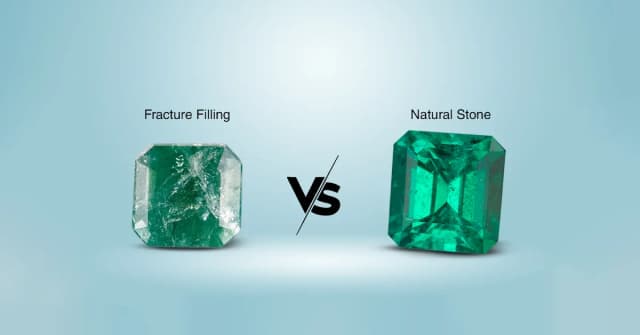
- The report helps in revealing whether the stone has undergone any kind of treatment like heat, oiling, filling, etc which can drastically change and affect the stone’s value.
- It supports the pricing as two identical looking gemstones can have very different values.
- A certificate helps in resale and insurance of the gemstone as it acts as the verification and documentation of the gemstone.
There are independent lab reports which creates a common language of trust between the buyers and the sellers.
Trusted Gemstone Certification Labs
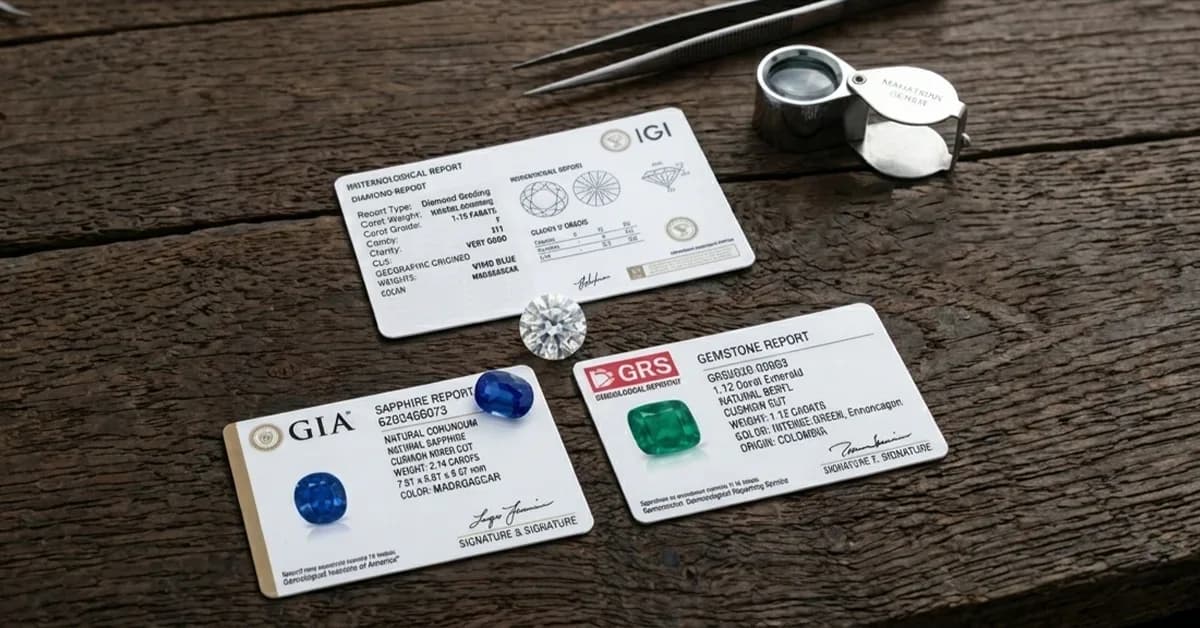
Now there are various independent lab report and laboratories but not everyone of them carries equal weight. The credibility of the laboratory maters as much as the credibility of the stone is in question. Some of the globally recognised gemstone laboratories are as follows:
- GIA (Gemological Institute of America)
- IGI (International Gemological Institute)
- SSEF (Swiss Gemmological Institute)
- Gübelin Gem Lab
- AGL (American Gemological Laboratories)
These are the laboratories which doesn’t sell any gemstones, their work is to analyse the stone. This analysis acts as an insurance of neutrality. Be cautious if the certificate comes from an unknown laboratory or a seller-owned laboratory.
Step-by-Step: How to Read a Gemstone Certificate
Now that we have an understanding of what a gemstone certificate is, let’s get into the step-by-step identification and understanding of the certificate.
Report Number & Date
The first thing to be checked in a certificate is:
- There is a unique identification number which is assigned to each and every gemstone.
- This unique identification number can be verified on the laboratory’s official website.
- This identification number will help you understand when the gemstone was analysed.
In case you cannot verify the number online then be cautious about the same.
Gemstone Identification
This is the most important step and section of the certificate as this answers the most critical question about the gemstone which is what exactly is the stone?
There will be terms like
- Natural Sapphire → mined from the earth
- Synthetic Sapphire → lab-created
- Sapphire (no qualifier) → ambiguous, needs clarification
A certificate from a reliable laboratory will always clearly state whether the gemstone is natural, lab-grown or synthetic along with any treatment done to it.
Carat Weight & Measurements
This section is rather straightforward but is equally important. This is the section which mentions the carat weight and measurements of the stone.
- Carat weight or referred as ct. is the identification which defines size.
- Dimensions shown as mm shows the proportions of the gemstone.
These are some small details which helps in comparing stones and verifying whether the gemstone matches its setting done.
Colour Description
You must have heard that colour is the driving aspect while choosing a gemstone. It is the biggest value driver specially in terms of coloured gemstones. Lab reports also describe the colour of the gemstone with specific terminology such as:
- “Vivid blue”
- “Medium dark greenish blue”
For coloured gemstones the more intense and saturated colours always demand higher prices.
Clarity & Inclusions
Clarity means the internal flaws that are present in a natural gemstone. These flaws are often times referred to as inclusions as well, there are also the surface marks. In a certificate it is denoted as:
- Fewer inclusions= higher clarity
- Some inclusions in a gemstone are natural and are expected as they play the role of fingerprint of the stone.
In terms of clarity, for coloured gemstones it is more flexible than diamonds. Some of the reports also includes diagrams which shows the inclusion position in the gemstone.
Cut & Shape
This is the section which explains how a gemstone is shaped and faceted. Some of the common shapes for any gemstone is as follows:
- Oval
- Cushion
- Round
- Emerald cut
Cut of a stone affects its brilliance, sparkle and the overall visual appeal.
Treatment Disclosure: Very Important
This is one of the most critical parts to be understood in a gemstone lab report. Always look out for phrases like:
- “No indications of heating” → premium, untreated
- “Indications of heating” → common, acceptable
- “Clarity enhanced” → lower value
- “Surface diffusion” → significantly reduced value
This section will help you understand the price of the gemstone. Treatments can reduce the value of the gemstone by 500-90% depending on the type of the stone.
Origin (If mentioned)
Some of the reports also mentions the state geographic origin, such as:
- Kashmir (Sapphire)
- Colombia (Emerald)
- Burma/Myanmar (Ruby)
Origin plays a vital role in affecting the stone’s price. Although not all the laboratories include the origin in their reports.
Comments Section
This is the section in the report where the laboratories include extra information and additional observation such as:
- Evidence of treatments
- Natural growth patterns
- Special characteristics
It is important that you read this section carefully, this often contains crucial details which is not obvious anywhere else.
Common Certificate Terminology You Should Know
Some of the common certificate terminologies which will help in reducing your confusion is as follows:
- Species: Mineral type (e.g., Corundum)
- Variety: Specific gem (e.g., Ruby, Sapphire)
- Natural: Formed in nature
- Synthetic: Lab-grown with same composition
- Simulant: Looks similar but different material
- Enhancement: Any treatment to improve appearance
Once you are aware of these terminologies mentioned in the certificate, it becomes easier for you to read them.
Red Flags to Watch Out For
Some of the red flags to look out for while reading a certificate, as not all of them are trustworthy. Things to be cautious about are:
- When there is no verifiable report number.
- The report has mention of the treatment details.
- There is vague wording like “looks natural”
- The certificate is issued by seller themselves.
Some of the certificates in the market are only a piece of marketing document. They do not hold value in the actual market.
Real-World Example: Reading a Certificate
Some of the real-world example of reading a certificate for making it simple is:
If you are looking at a certificate for a sapphire:
- Identification: Natural Sapphire
- Treatment: Indications of heating
- Colour: Vivid blue
- Weight: 2.05 ct
The actual meaning of the points mentioned is:
- That the stone in consideration is a natural gemstone which is good.
- The stone has slight indication of heating done to it which is common and acceptable.
- The colour is strong which makes it valuable.
Now the point is to compare it with the synthetic sapphire and the no treatment information. The second one which is synthetic is far less valuable even if it looks similar.
Conclusion
Reading a certificate is rather easy for people when they understand the basics of it, even if you are not a gemmologist. You just need to focus on the structure and certain essentials like is the stone natural, has it been treated, can the report be verified, and lastly which lab it was issued from.
Everything apart from this essentials like colour, clarity, and cut helps in refining the value of the stone but the basics will help you in safeguarding yourself from making a grave costly mistake. Gemstone market can be quite deceiving, therefore having an understanding of a certificate gives you confidence.

Durgesh Sharma
Durgesh Sharma is a passionate writer and certified gemstone expert with over four years of practical experience in the field of gemology. Alongside his creative writing journey, he specializes in helping individuals choose the right gemstones based on astrological principles and personal needs.