14 Gemstone Facts So Strange You Won’t Believe They’re Real
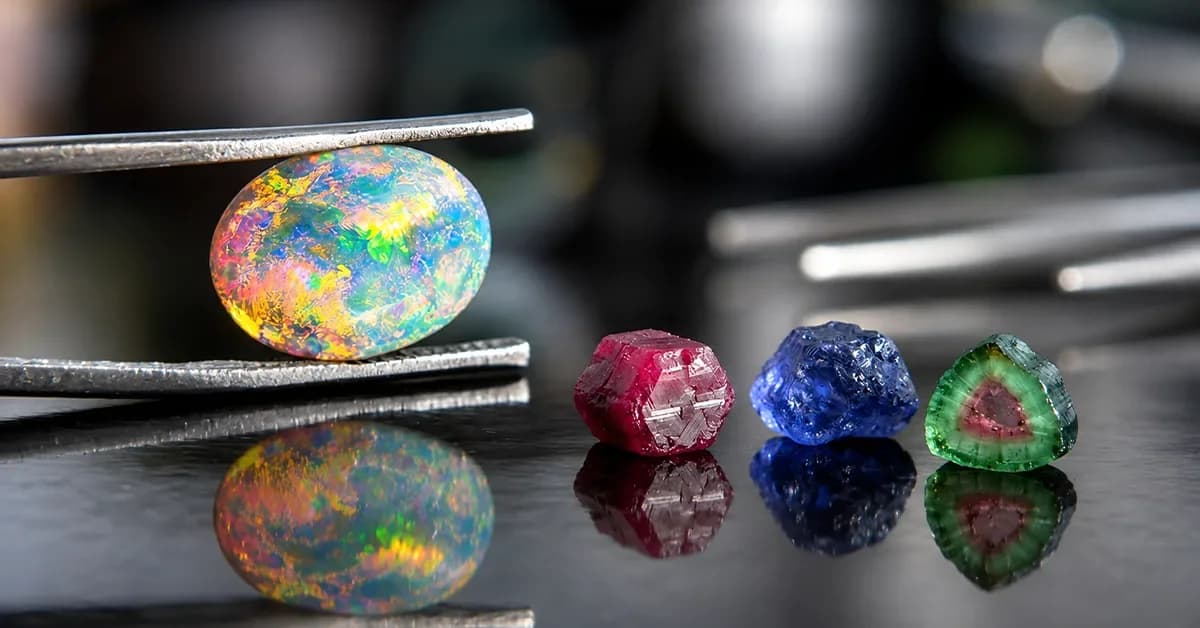
Most people think they know gemstones: diamonds are shiny, emeralds are green, and that's about it. But dig a little deeper and the stone world gets astonishing.
There's a diamond the size of a fist, straight out of the earth in Botswana, a "boring" brown rock that splits open to reveal a rainbow inside, and a purple gem that quite literally fell from outer space.
In this list, we're covering the strangest, most surprising gemstone facts out there, the kind that sound too wild to be true but absolutely are. By the end, you'll never look at a rock the same way again.
1. The Emerald That Refused to Be Cut
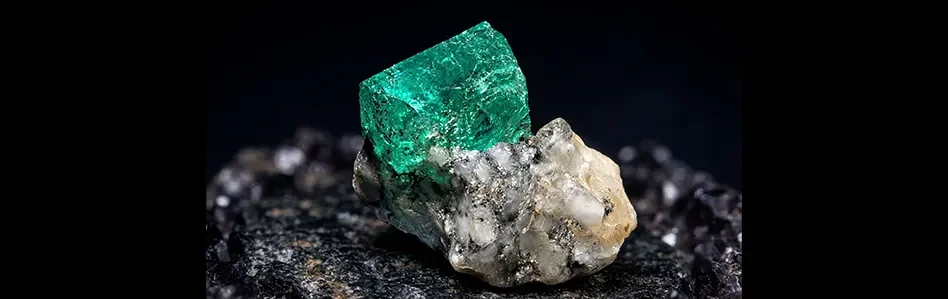
The Smithsonian’s National Gem Collection has a 100‑carat emerald that deny every rule of modern gem cutting.
Instead of facets, it’s a polished cross‑section through the original crystal, its natural six‑sided hexagonal outline left perfectly intact.
Look closely, and you can actually see it change color from the center outward, pale green giving way to a deeper rim; emerald’s growth looks like a historical tree ring.
Gemologists trace the emerald's roots to Colombia, while in the 1600s it came to India, where Mughal artisans carved a lotus blossom into it.
Two tiny drill holes reveal that it was an amulet or garment ornament, stitched onto cloth or ribbon; today it rests in a platinum‑and‑diamond necklace at the Smithsonian. It’s a museum prize that proves that an uncut rock can tell a better story than most finished jewels.
2. The Ugly Rock With a Secret
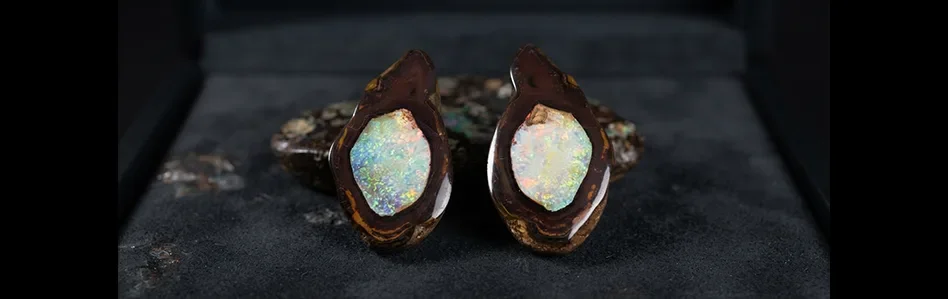
In Yowah, Queensland, a remote patch of Australia, opal hunters have learned not to judge a rock by its crust. Plain, brown, forgettable-looking ironstone nuggets, the kind you'd walk past without a second glance, sometimes crack open to reveal an entire galaxy of color hiding inside.
These are called “Yowah Nuts,” and they’re one of nature’s best-kept secrets. But inside, a pocket of precious opal has silently formed over millions of years, radiating flashes of blue, green, orange, red, yellow, and purple when the light hits it just right.
Only a tiny fraction of Yowah Nuts contain gem-quality opal, making each discovery a high-stakes gamble. One particular example is the Yowah Opal Nut in the Smithsonian’s National Gem Collection, which weighs about 30 carats.
It displays a rare split body color: one half white, the other blue, with vivid play-of-color across the spectrum. Miner Rod Griffin found it and called it the finest Yowah Nut he’d ever discovered; the stone was donated to the Smithsonian in 2010 as a gift from the Richard Ashley Foundation.
The takeaway? Some of the most breathtaking gemstones in the world are hiding in plain sight, wrapped in the most boring packaging imaginable. Next time you see an ugly rock, maybe don’t kick it.
3. A diamond as big as a fist was found in Botswana in 2024

In August 2024, miners at Botswana’s Karowe mine opened a hard outer shell of kimberlite and found a diamond so massive that it can be a headline for decades: the Motswedi.
It weighs around 2,488.32 carats (about 1.1 pounds), and it became the second-largest gem-quality rough diamond ever found. It was surpassed only by the legendary 3,106‑carat Cullinan discovered in South Africa in 1905.
When the Gemological Institute of America (GIA) examined the stone in July 2025, its verdict was extraordinary: Motswedi is a single gem-quality crystal, type IIa, with no detectable nitrogen, a purity grade shared by fewer than 2% of all natural diamonds. GIA scientists concluded that it “undoubtedly formed much deeper within the earth than the majority of diamonds,” crystallizing hundreds of kilometers underground before being carried to the surface by ancient volcanic eruptions
4. Tanzanite exists in exactly one place on the entire planet.
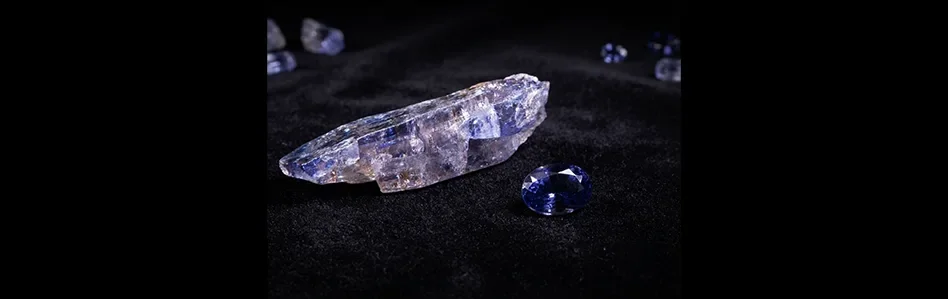
Every gem-quality tanzanite on Earth comes from a single deposit in the Merelani Hills of northern Tanzania, an area roughly 7 km × 2 km (about 20 km²), Geologists consider it effectively impossible for another deposit to be found elsewhere, making it roughly a thousand times rarer than diamond.
5. There's a 400-pound amethyst in the Smithsonian collection.

Ask someone what's in the Smithsonian's gem collection, and you'll hear "Hope Diamond" before anything else. Fair enough, and they will not think of a 400‑pound rock.
Yet the museum’s vast mineral halls hold a mass of amethystine quartz weighing about 400 pounds, recovered from a legendary geode discovered in Rio Grande do Sul, Brazil.
Early 20th‑century Smithsonian reports describe it as a “magnificent mass” of deep purple crystal, a showcase piece from one of the world’s most famous amethyst geodes.
6. Some gems fell from outer space.

Not every gemstone formed slowly, deep underground, over millions of patient years; Moldavite did the opposite.
About 15 million years ago, a meteorite slammed into what's now southern Germany with enough force to melt the surrounding rock into liquid glass, flinging droplets through the air where they cooled mid-flight into the forest-green stone people now cut and wear as gemstones.
So the next time someone tells you their necklace is "out of this world," ask if it's moldavite. It might actually be true.
7. One gemstone was discovered by accident in an emerald mine.

Alexandrite's whole existence is basically a happy accident. Back in the 1830s, miners in Russia's Ural Mountains were digging for emeralds and pulled out a stone that looked exactly like one.
According to gemological histories, the green stone shocked everyone in daylight, then turned red under candlelight that same evening.
8. Alexandrite’s color change never fades, because it’s baked into the crystal.

The alexandrite's color change from green to red isn’t a coating or treatment; it comes from chromium atoms locked into the chrysoberyl structure, selectively absorbing yellow light and transmitting red and green. So a well-cut alexandrite will change color in the same way decades from now.
9. The largest GIA-certified pearl in the world weighs over 60 pounds.

Most people picture pearls as small, round, and delicate. The Giga Pearl laughs at that idea. It was found in the Philippines; it weighs a staggering 27.65 kilograms (over 60 pounds), holds the Guinness World Record as the largest certified pearl ever found, and is more than four times heavier than the previous record-holder. GIA backed the claim, too, confirming it as the largest natural nacreous pearl on record.
10. Amber is fossilized tree resin, not a mineral.
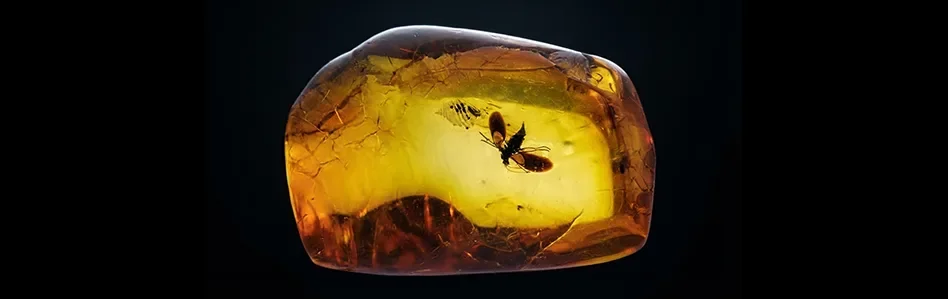
Amber is a fossilized tree resin, hardened and preserved over millions of years, and it is not a mineral. It can preserve insects, plant matter, and even feathers, offering a unique window into prehistoric ecosystems.
11. Pearls are the only gems grown inside living animals.
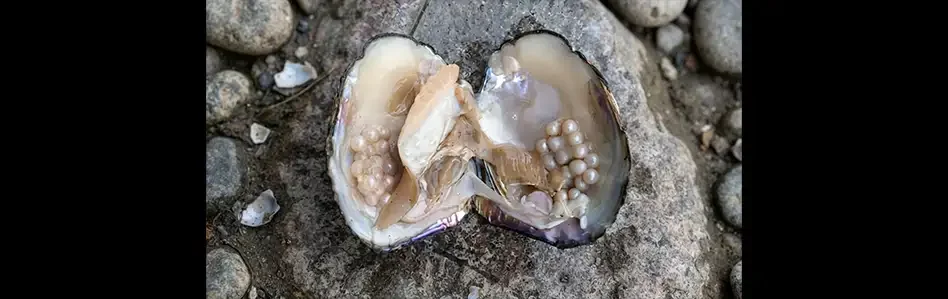
Natural and cultured pearls form within mollusks (oysters, mussels) as a biogenic response to irritation; they are the only gemstones created by a living creature rather than by geological processes. Cultured pearls typically take 1–3 years to grow.
12. A few gems keep glowing after the light is off (phosphorescence)
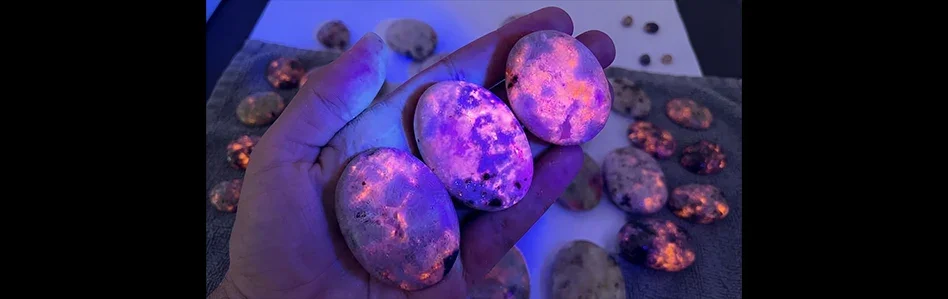
Certain materials such as hackmanite (a sodalite variety), some willemite specimens, and select diamonds exhibit phosphorescence, continuing to emit visible light for seconds to hours after UV exposure ends.
This “afterglow” distinguishes them from purely fluorescent gems.
13. Many gemstones glow under UV light (fluorescence)

About 35% of natural colorless-to-faint-yellow diamonds fluoresce (usually blue) under long-wave UV; rubies famously glow vivid red due to chromium, and some emeralds show faint red fluorescence when iron content is low. Fluorescence stops immediately when you remove the UV source.
14. Peridot is a “space gem” found in meteorites.
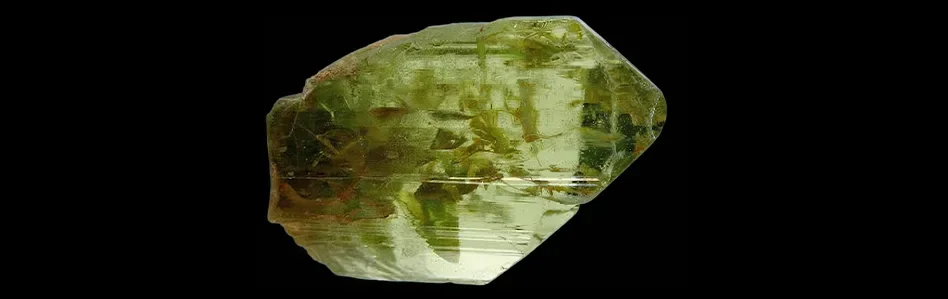
Peridot has a claim almost no other gemstone can make: it's been found beyond Earth. NASA's Stardust probe picked up traces of peridot (gem-quality olivine) in comet dust, and it's also turned up in pallasite meteorites. This makes it one of the few gem materials confirmed to exist beyond Earth.
To Conclude
From a fist-sized diamond to a pearl that outweighs a bowling ball, these gemstone facts are proof that the natural world has plenty of gemstones.
Whether it's tanzanite existing in a single patch of Tanzania, moldavite born from a meteorite strike, or an emerald left uncut simply because it was already perfect, every stone on this list carries a story most people never hear.
Gemstones aren't just beautiful; they're geological time capsules, cosmic travelers, and occasional happy accidents. Next time you spot a "boring" rock or an old piece of jewelry, remember: it might be hiding something extraordinary.
Keep exploring, keep asking questions, and keep an eye out for the next bizarre gemstone discovery.
Stay updated with GemstoneToday for more gemstone-related information.

Pankhur Grover
Pankhur is a Content enthusiast who loves to bring stories to life through words. She enjoys turning complex ideas into engaging, informative content. Her curiosity often leads her to discover inspiration from the most unexpected places. From the world of fashion and lifestyle to gemstones and jewellery, she loves discovering fresh perspectives and bringing interesting details to readers.
- 1. The Emerald That Refused to Be Cut
- 2. The Ugly Rock With a Secret
- 3. A diamond as big as a fist was found in Botswana in 2024
- 4. Tanzanite exists in exactly one place on the entire planet.
- 5. There's a 400-pound amethyst in the Smithsonian collection.
- 6. Some gems fell from outer space.
- 7. One gemstone was discovered by accident in an emerald mine.
- 8. Alexandrite’s color change never fades, because it’s baked into the crystal.
- 9. The largest GIA-certified pearl in the world weighs over 60 pounds.
- 10. Amber is fossilized tree resin, not a mineral.
- 11. Pearls are the only gems grown inside living animals.
- 12. A few gems keep glowing after the light is off (phosphorescence)
- 13. Many gemstones glow under UV light (fluorescence)
- 14. Peridot is a “space gem” found in meteorites.
- To Conclude